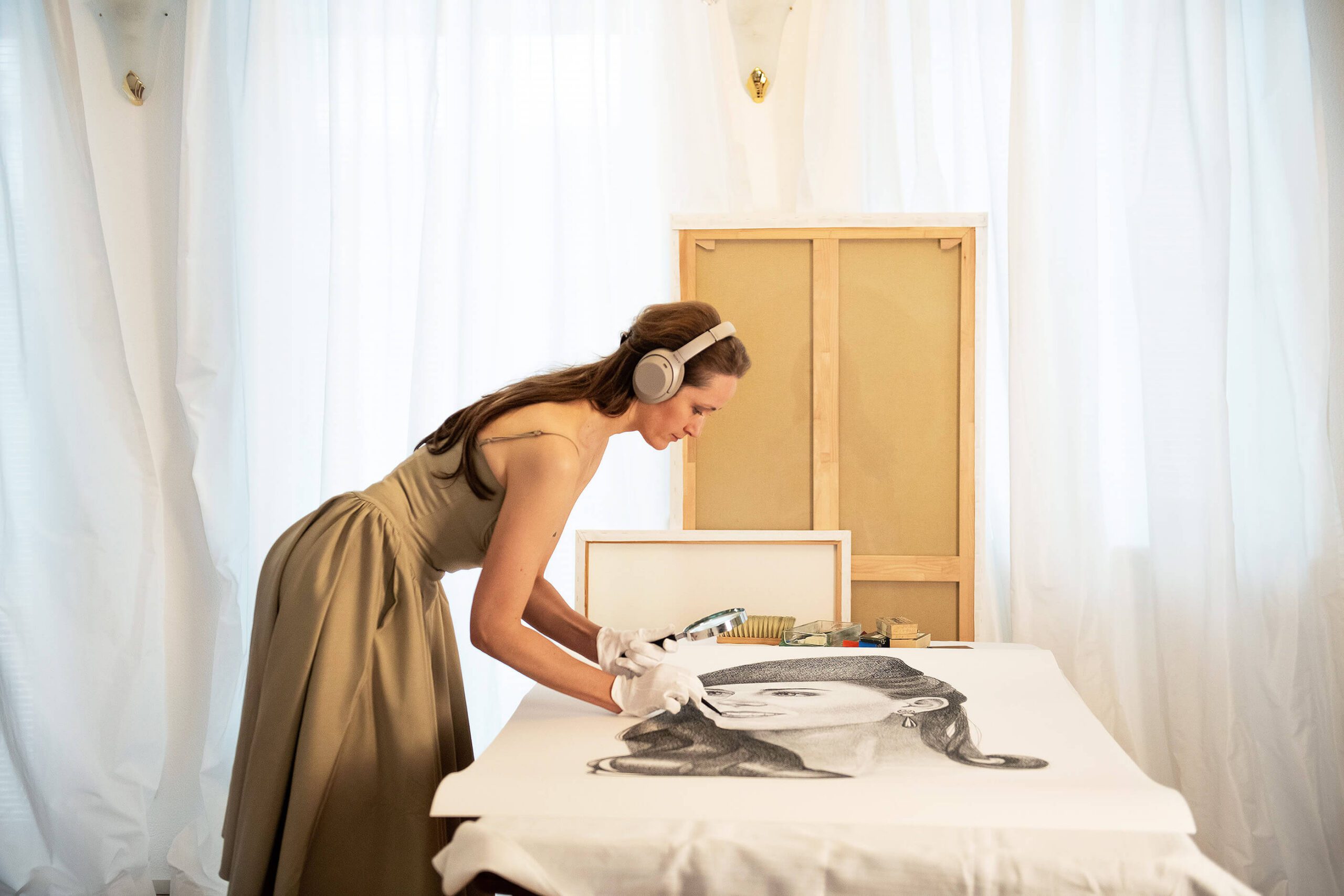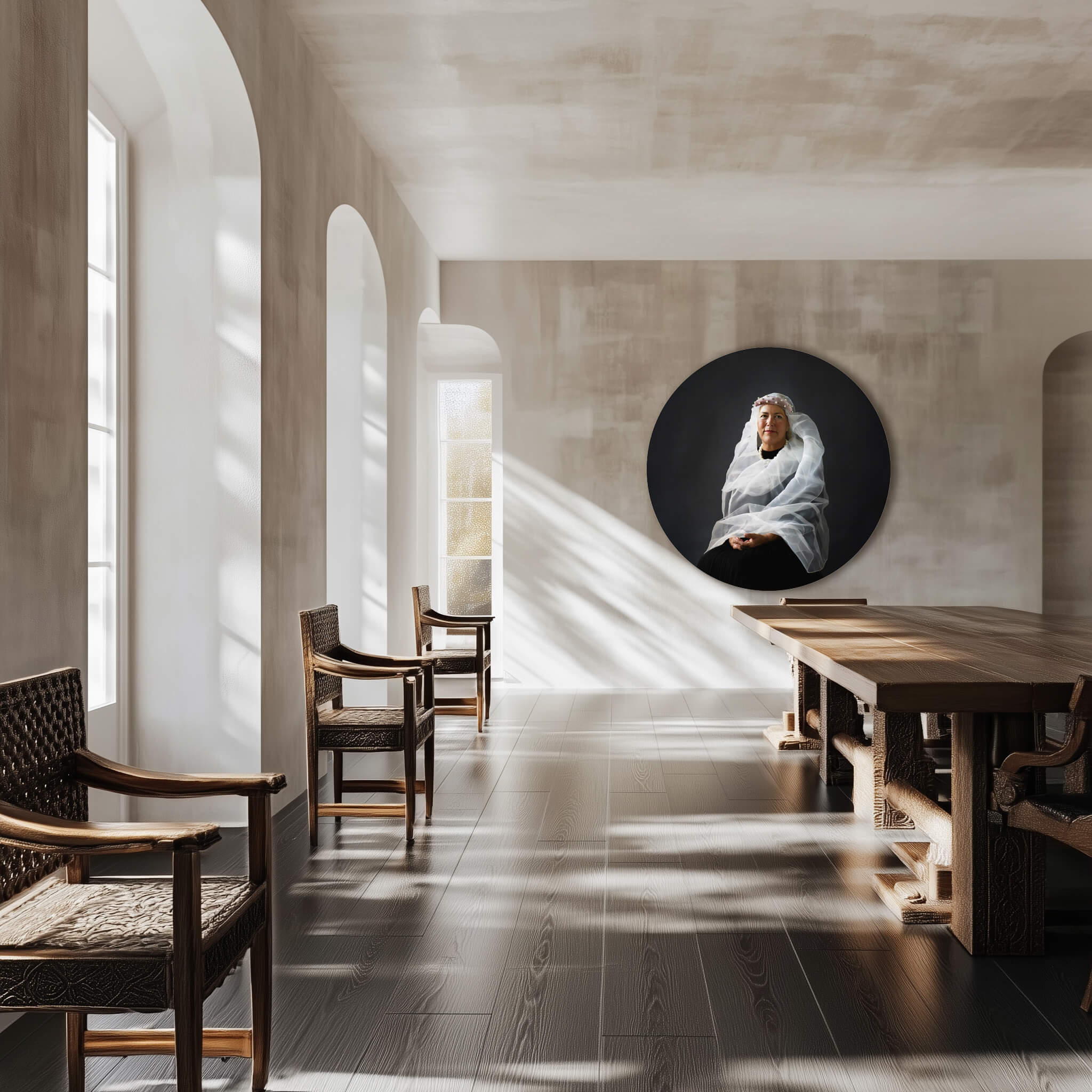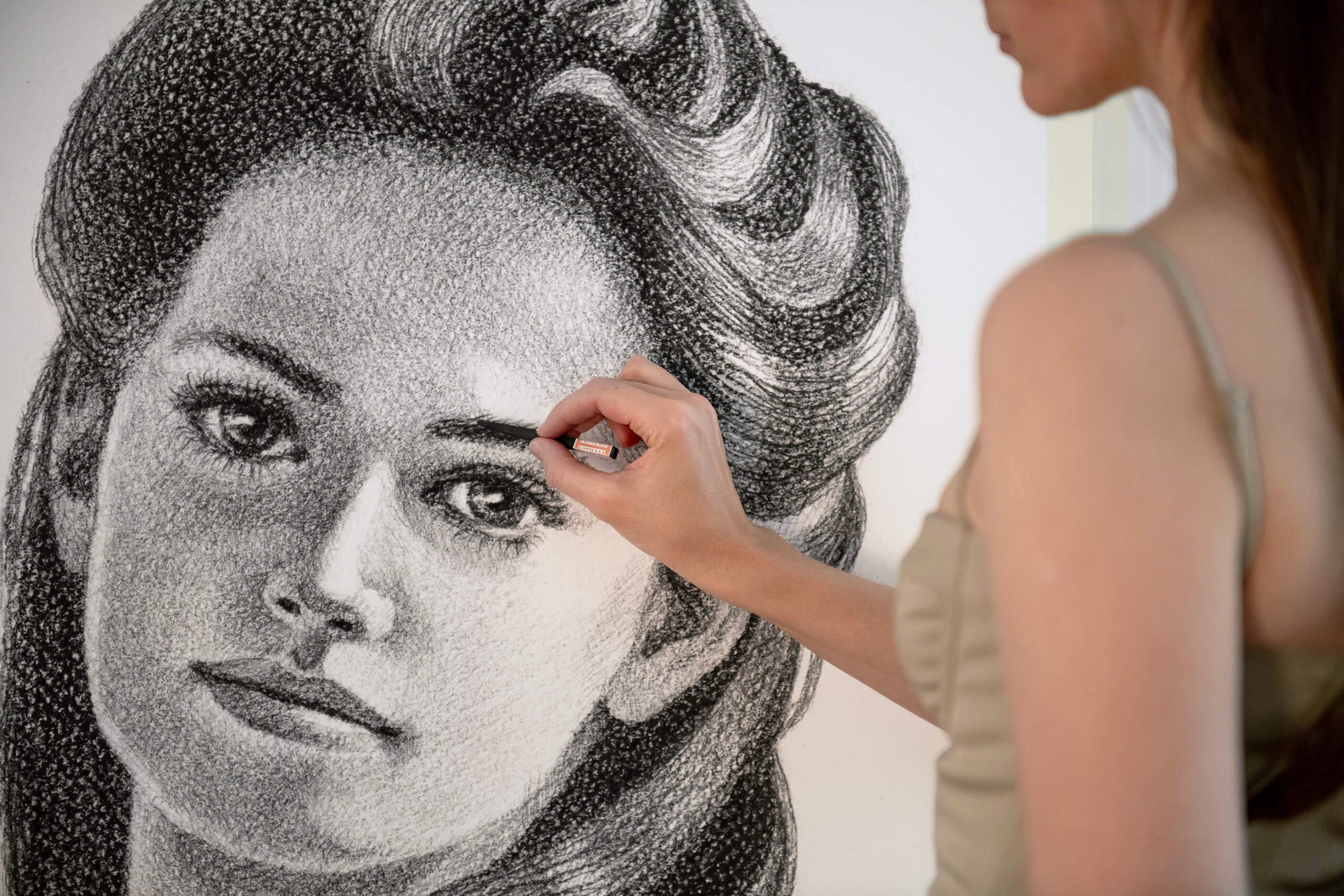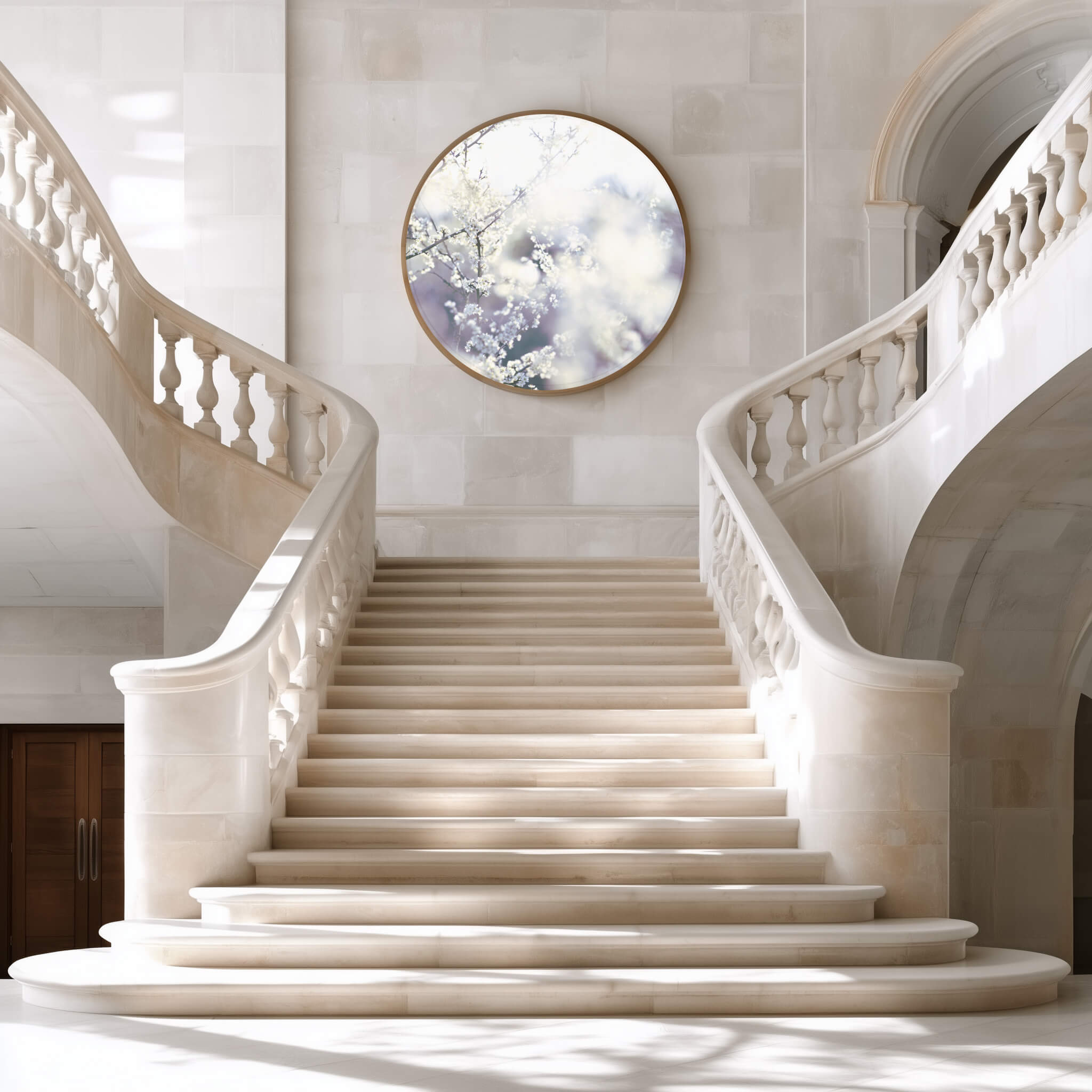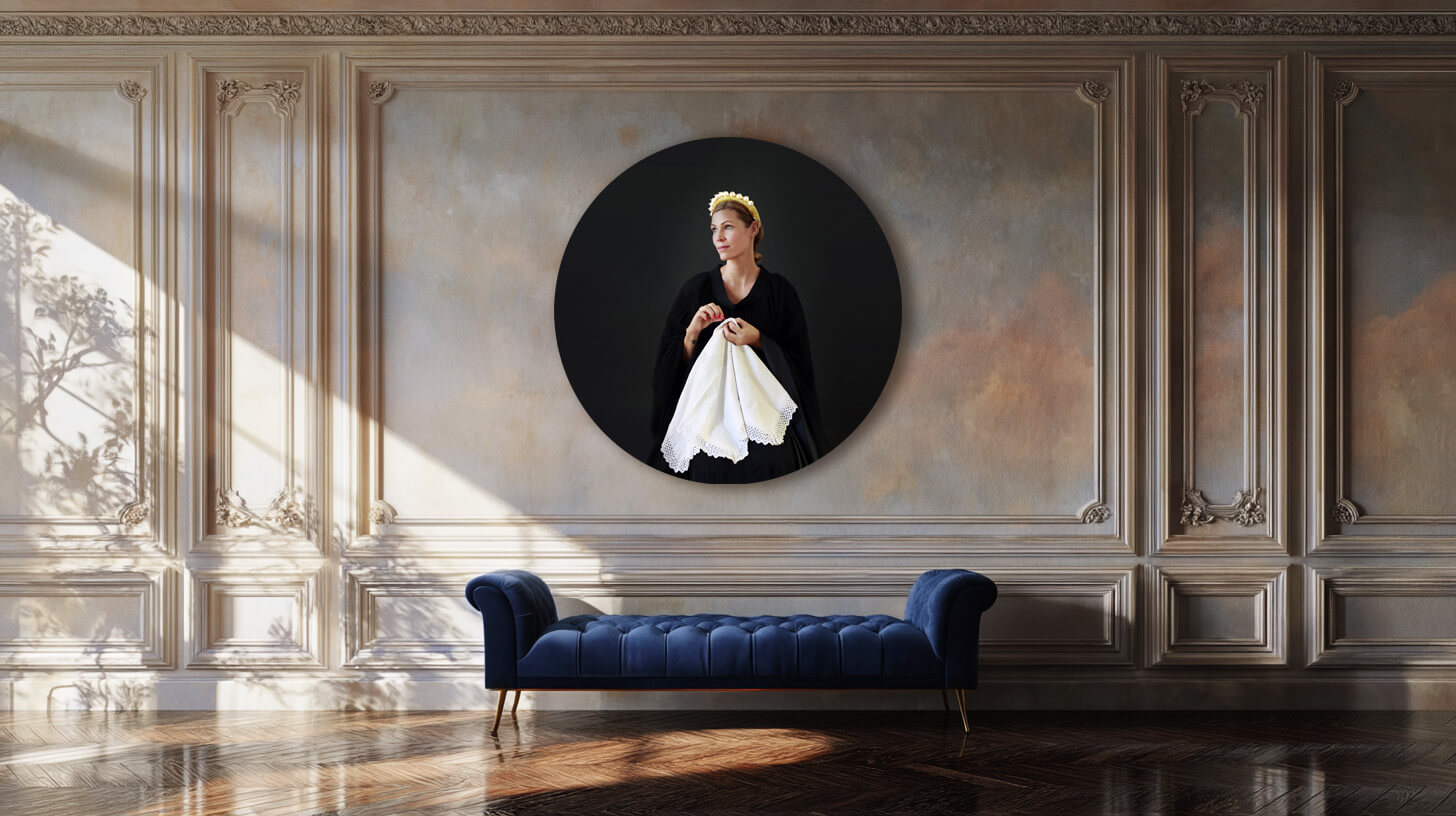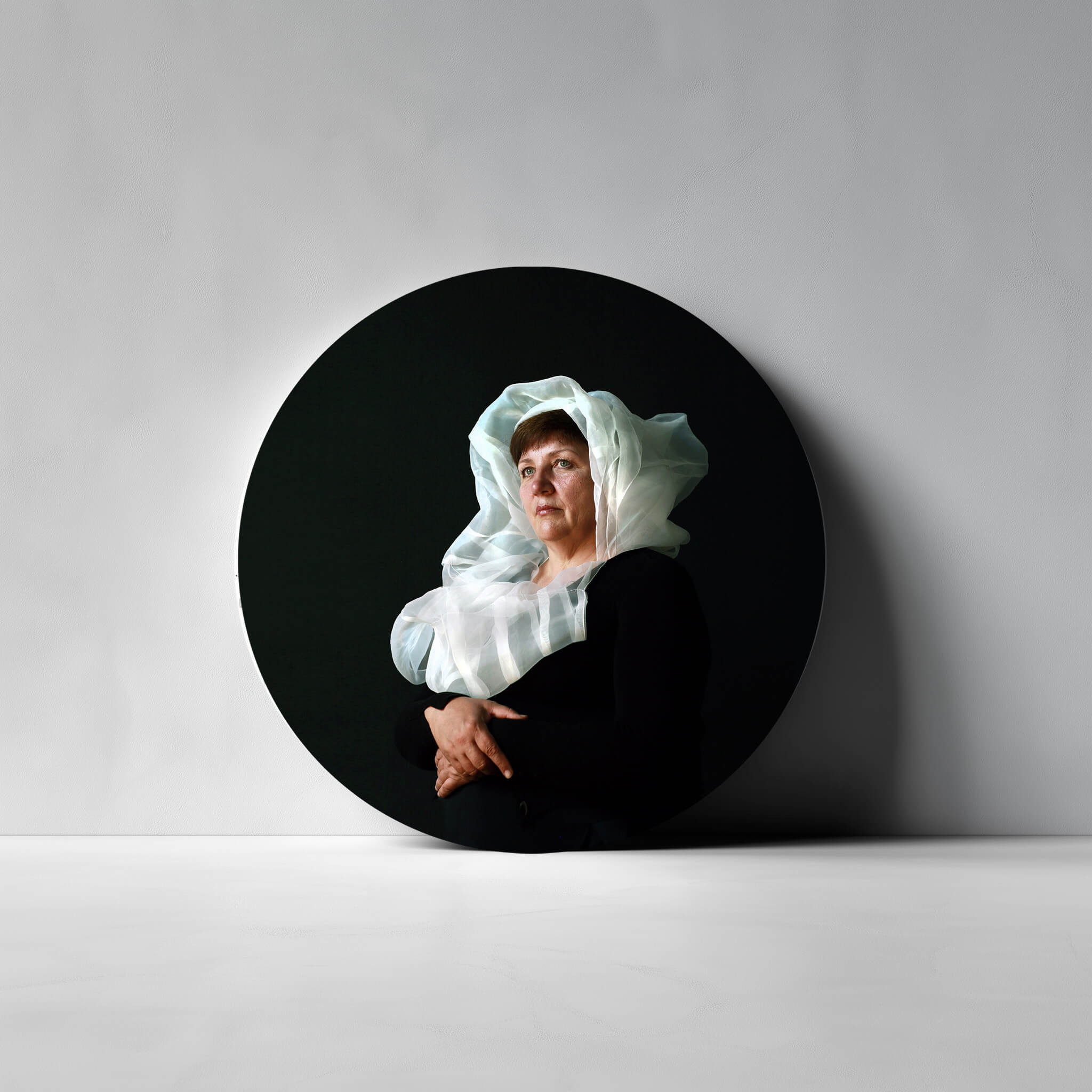


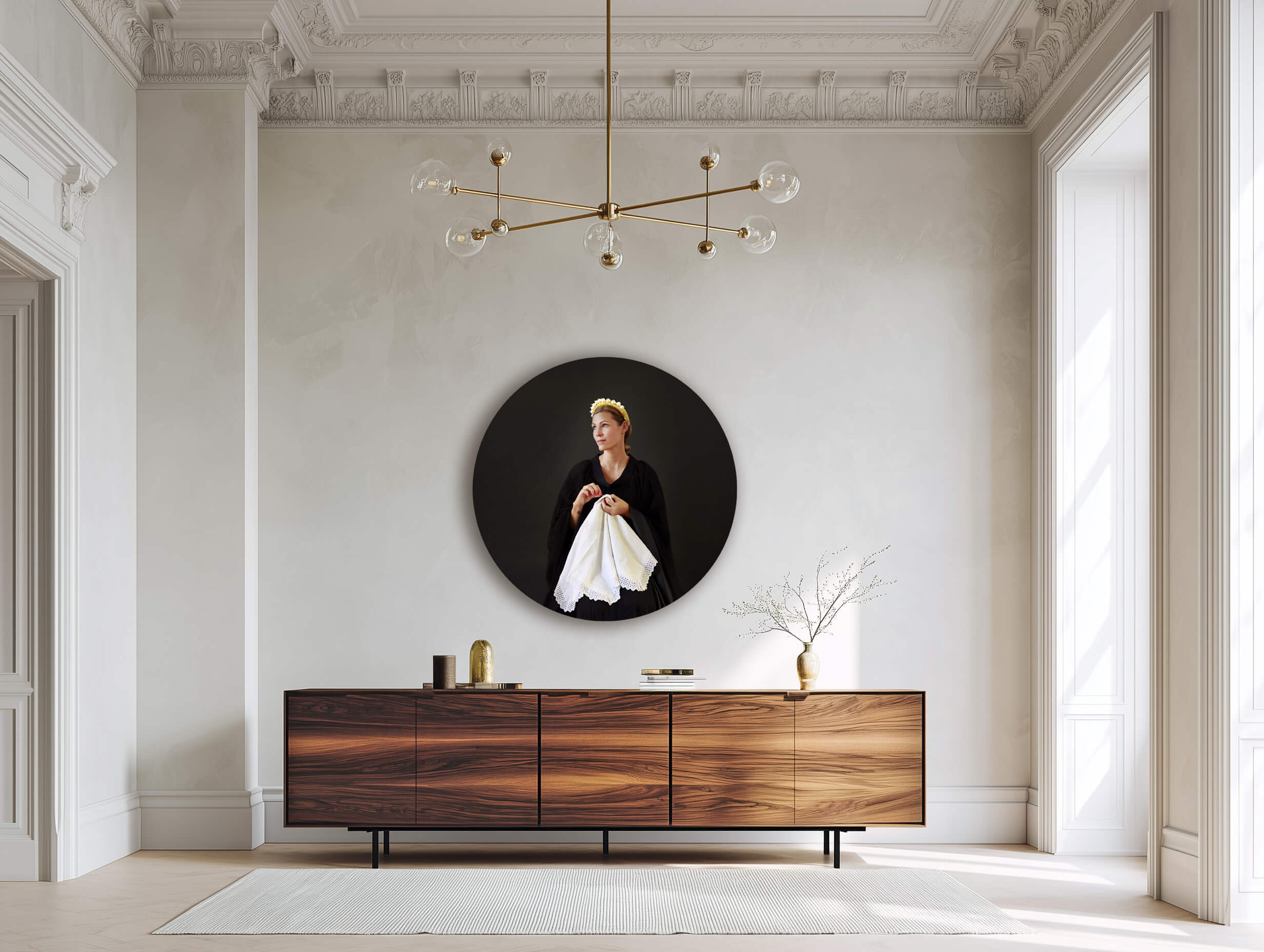
Art for interiors is not only decoration. The right artwork does not simply fill a wall. It changes the emotional (and intellectual) temperature of a room. It gives the space a point of attention. It can make a bedroom quieter, a study more focused, a hallway more memorable, or a living room feel less like a designed space and more like a place with a soul.
This is why I think carefully about how an artwork lives after it leaves the studio. A work may begin with an image, a portrait, a forest atmosphere, a gesture, a circle, a face, or a certain kind of light. But eventually, it enters a room. It begins a second life there.
It meets the person who lives with it. That is where art becomes intimate.
Art for interiors begins with atmosphere
A room has an atmosphere before we explain it. You can feel when a space is restless. You can feel when it is too empty, too polished, too loud, too cold, or too anonymous. You can also feel when a room has memory, warmth, depth, and a kind of quiet intelligence.
Art is one of the fastest ways to change that atmosphere. Not because art is magic. But because art gives the eye somewhere meaningful to return.
A strong artwork can slow the room down. It can create a centre. It can interrupt sameness. It can introduce softness, power, mystery, discipline, beauty, or a private symbol that belongs to the person who chose it.
This is why art for interiors should never be chosen only by colour. Colour matters. Scale matters. Framing matters. But the deeper question is: What should this room help you remember?
Decoration fills space. Transformative artworks change it.
There is nothing wrong with decoration. But decoration and art do different things.
Decoration often completes a look. Art can complete a feeling.
Decoration may match the palette. Art may shift the entire room.
Decoration often asks, “Does this work here?” Art asks, “What happens to the space when this is present?”
Transformative artworks do not need to be loud. They do not need to be enormous, expensive, or difficult. Some of the most powerful works are quiet.
- A small piece beside a writing desk can become a private companion.
- A circular portrait in a bedroom can feel like a mirror.
- A forest work in a hallway can make the transition from one room to another feel slower and more grounded.
- A limited-edition artwork in a library can become part of the way a person thinks.
The transformation is not always dramatic. Sometimes it is almost invisible at first. Then, one day, the room feels different without it.
Choose art for the life of the room
When choosing art for interiors, I like to ask what the room is for emotionally. Not only functionally.
- A dining room is not only for eating. It may be for gathering, hosting, memory, conversation, celebration, reconciliation.
- A bedroom is not only for sleep. It may be for return, softness, privacy, recovery, and the part of yourself that does not need to perform.
- A study is not only for work. It may be for decisions, writing, ambition, discipline, and inner authority.
- A hallway is not only a passage. It may be a threshold.
- A child’s room, a family room, a studio, a library, a dressing room, a quiet corner near a window — each space carries a different emotional task.
The artwork should understand that task. This is why I create works for spaces where you feel most yourself.
Tate describes genre painting as painting of subjects from everyday life. Interiors have long belonged to this way of looking: rooms, gestures, objects, and private spaces are never neutral. They reveal how people live, what they value, and what kind of atmosphere surrounds them.
This is also why learning to look at art matters. The National Gallery’s resources on learning to look at art are a reminder that seeing is not passive. The more slowly we look, the more clearly we understand what an artwork changes in us and in the space around it.
Practical details matter too. Architectural Digest’s guide on how to light artwork at home notes the importance of avoiding damage from direct sunlight and choosing lighting that protects the work while allowing it to be seen properly.
Art can make a room more personal
Many beautiful interiors still feel strangely impersonal.
Everything is correct. Nothing is alive.
This often happens when a room is designed around style but not around recognition.
Recognition is different. Recognition is the moment you see a work and feel that it belongs near you, even before you can explain why. It may be the posture of a figure, the darkness around a face, the atmosphere of a forest, a certain pale flower, a circle, a veil, a gesture, a silence.
Art for interiors becomes powerful when it reveals something about the person who lives there. Not in an obvious way. A personal collection does not need to announce your biography. It can hold your becoming. Your values. Your longing for beauty. Your need for quiet. Your courage. Your softness. Your private discipline. Your desire to build a life that feels more honest from the inside.
This is why one meaningful artwork can do more than ten decorative pieces.
It gives the room a pulse.
Scale, placement, and silence matter
The way an artwork is placed changes how it is experienced. A large work can hold a room, but a small work can hold attention. A piece placed too high can feel disconnected. A work crowded by too many objects can lose its breath. A quiet artwork may need space around it. A more powerful piece may need a room that can answer it.
Silence around art is not emptiness. It is respect.
When placing artwork, consider:
- Where does the eye naturally land?
- Will the work be seen from a distance or up close?
- Does the room need a centre or a whisper?
- Should the artwork lead the space or hold a private corner?
- Does the frame support the work without overpowering it?
- Will the light protect the piece and allow it to be seen properly?
Good placement allows the artwork to become part of the architecture of attention.
Art for interiors and the collector’s eye
Collectors often begin with attraction.
Then, slowly, they learn what kind of attraction it is.
Some works are beautiful for a moment. Others continue to return.
The works that return are the ones to pay attention to.
A strong personal collection often begins when you notice a thread. Perhaps you keep returning to portraits. Perhaps to forests. Perhaps to women who appear calm but not passive. Perhaps to interiors that feel like sanctuaries. Perhaps to works that hold a balance between beauty and severity.
This thread matters.
It helps you move from buying images to building a collection.
The room becomes not only designed, but authored.
My approach to artworks in private spaces
At Atlanta Weiss Studio, I create contemporary portrait works, fine art editions, and studio letters for those returning to themselves.
Some works belong to Archetype Archives, where portraiture becomes a language of inner figures. Some belong to Forest Frequencies, where atmosphere, nature, and quiet perception come forward.
Both worlds are made for interiors, but not as background.
They are made for rooms where the person living with the work wants to feel more present, more returned, more honestly accompanied by beauty.
I think of artworks as presences.
A work can be a mirror.
A threshold.
A witness.
A form of protection.
A reminder of who you are becoming.
That is why art for interiors is never only about the room.
It is also about the life inside it.
How to begin choosing art for your own interior
Start with one room. Not the whole house. Choose the room where you most want to feel different: More grounded. More awake. More protected. More beautiful. More focused. More yourself.
Then ask: What is missing here? Not in the design. In the atmosphere. Is the room asking for a figure, a landscape, a darker note, a softer presence, a circular form, a work that feels like stillness, or a piece that holds quiet strength? Then look for the artwork that answers that question. You do not need to rush. The right work often does not shout. It stays.
Continue inside the AW world
If you are beginning to choose art for your home, you are warmly invited to receive Studio Notes — letters on portraiture, collecting, interiors, beauty, and artworks made for spaces where you feel most yourself.
You can also read Start Collecting Art That Feels Like You, explore limited-edition artworks from Archetype Archives and Forest Frequencies, or join Portrait Letter Club for a monthly studio letter and collectible work.
Art for interiors is not only decoration. A quiet guide to choosing transformative artworks that change the atmosphere of a room and help create spaces where you feel most yourself.