

Artist values in portraiture are not abstract ideas. They decide what enters the frame, what stays out, how much silence a face is allowed, and whether the final work feels alive or merely correct.
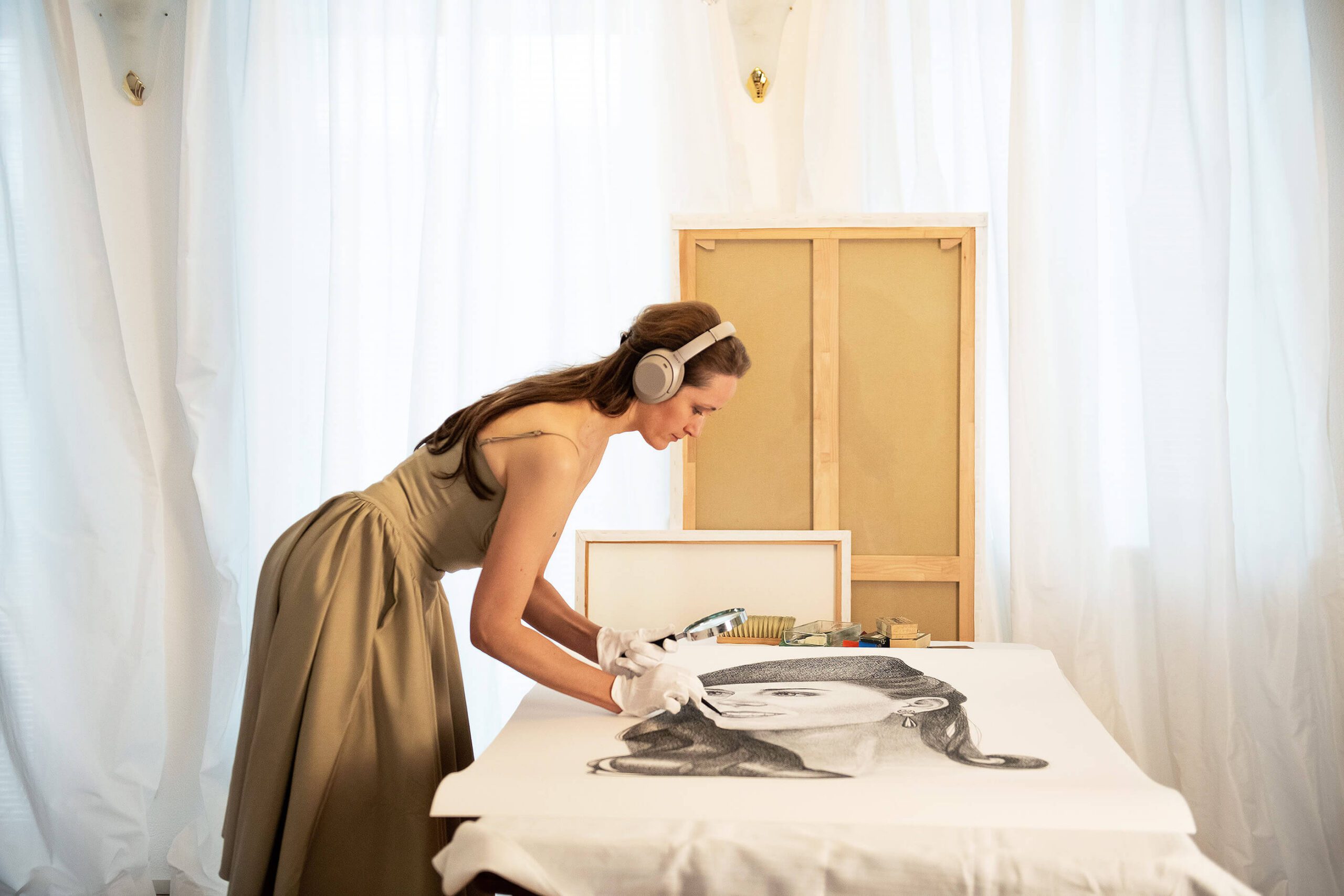
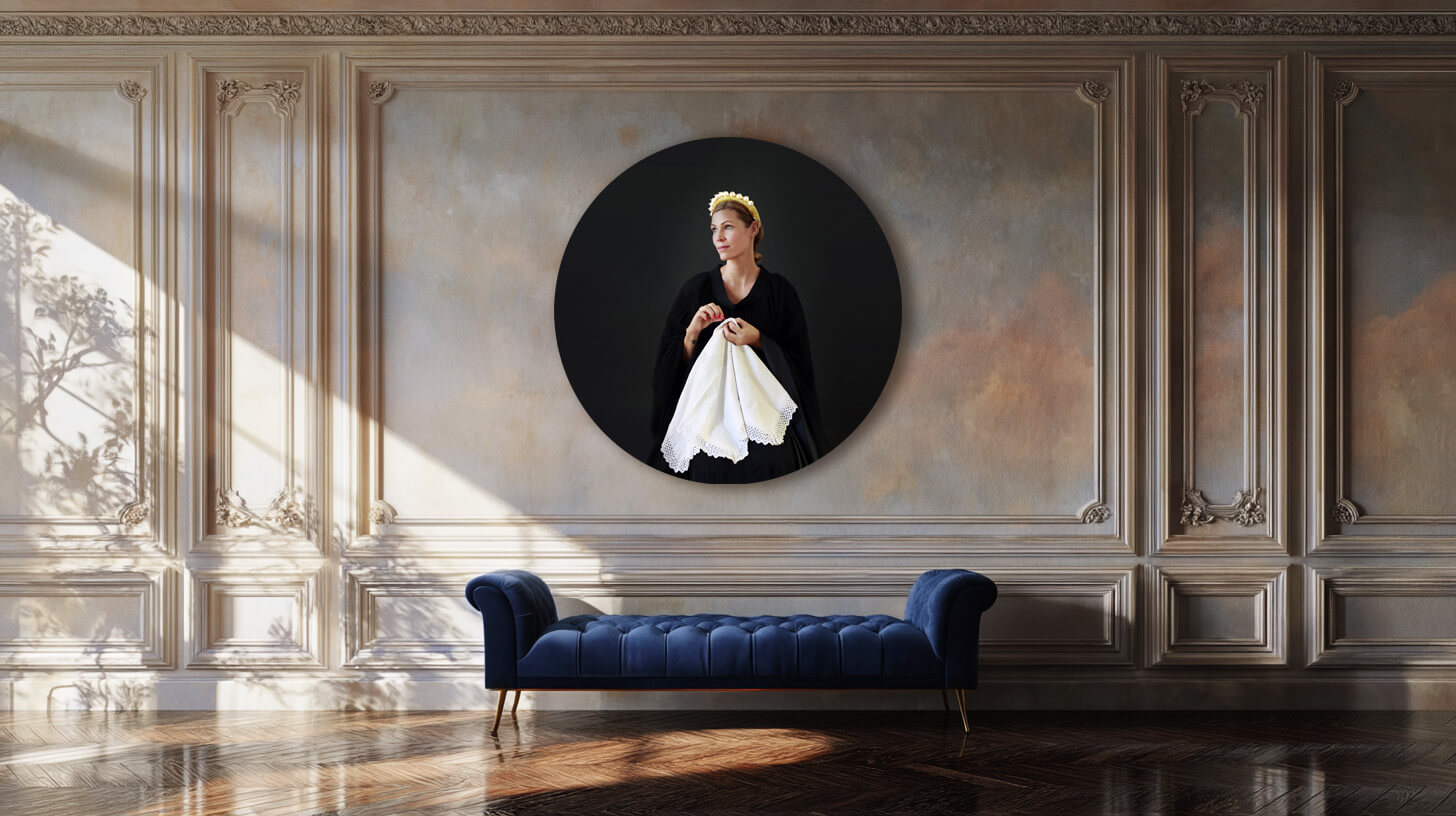
It’s 2 a.m. and the studio is lit the way museums aren’t—one cone of warm light, the rest in hush. I’m standing in front of a piece that refuses to resolve, a white cloth ghosting in my hands like a thought that won’t quite name itself.
On the wall beside the easel there’s an index card taped at eye level. Three words written in pencil I can’t help but read aloud before I pick up anything: Dynasty. Beauty. Excellence. I say them like a vow. The room arranges itself around that small sound. I can feel the composition settle. Light behaves. My job, at this hour, is simply not to lie.
These three words remind me that a portrait is never only an image of a person. It is a record of attention. It can become an archive, a mirror, a family object, a private witness, or a work that changes the emotional temperature of a room.
Tate (London, UK) describes a portrait as a representation of a particular person. I agree, but I also think a portrait begins where representation is no longer enough.
A portrait must ask what kind of presence is being protected.


Values in portraiture are visible before they are explained
Press releases love slogans. Paintings do not. If my three words don’t change my materials and my decisions, they’re just embroidery. This is how they have learned to insist:
A viewer may not know what an artist believes, but they can feel it. They can feel whether the work was rushed. They can feel whether the sitter was flattened into style. They can feel whether the artist wanted applause, fashion, intimacy, truth, or distance. A portrait carries those decisions in its bones.
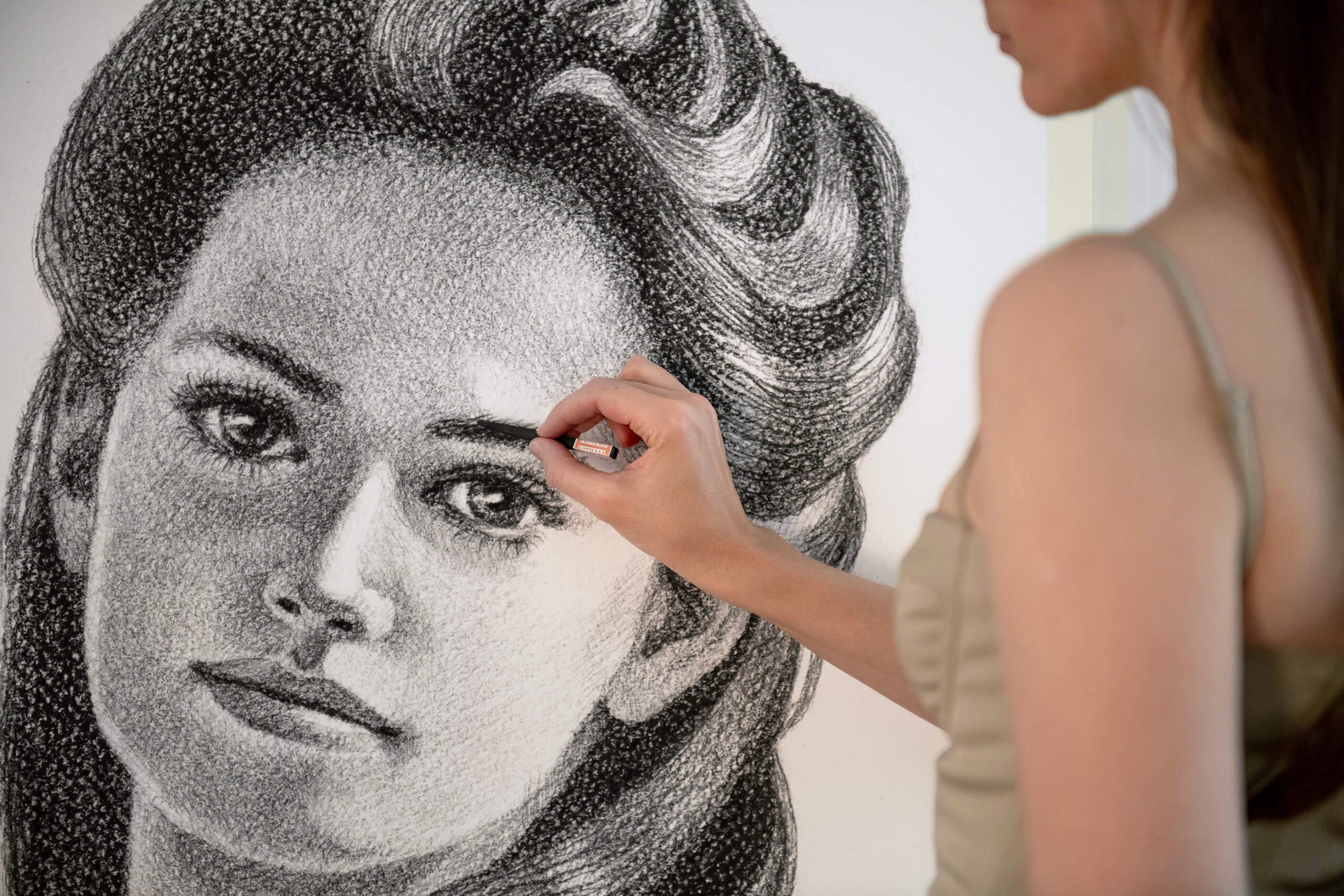
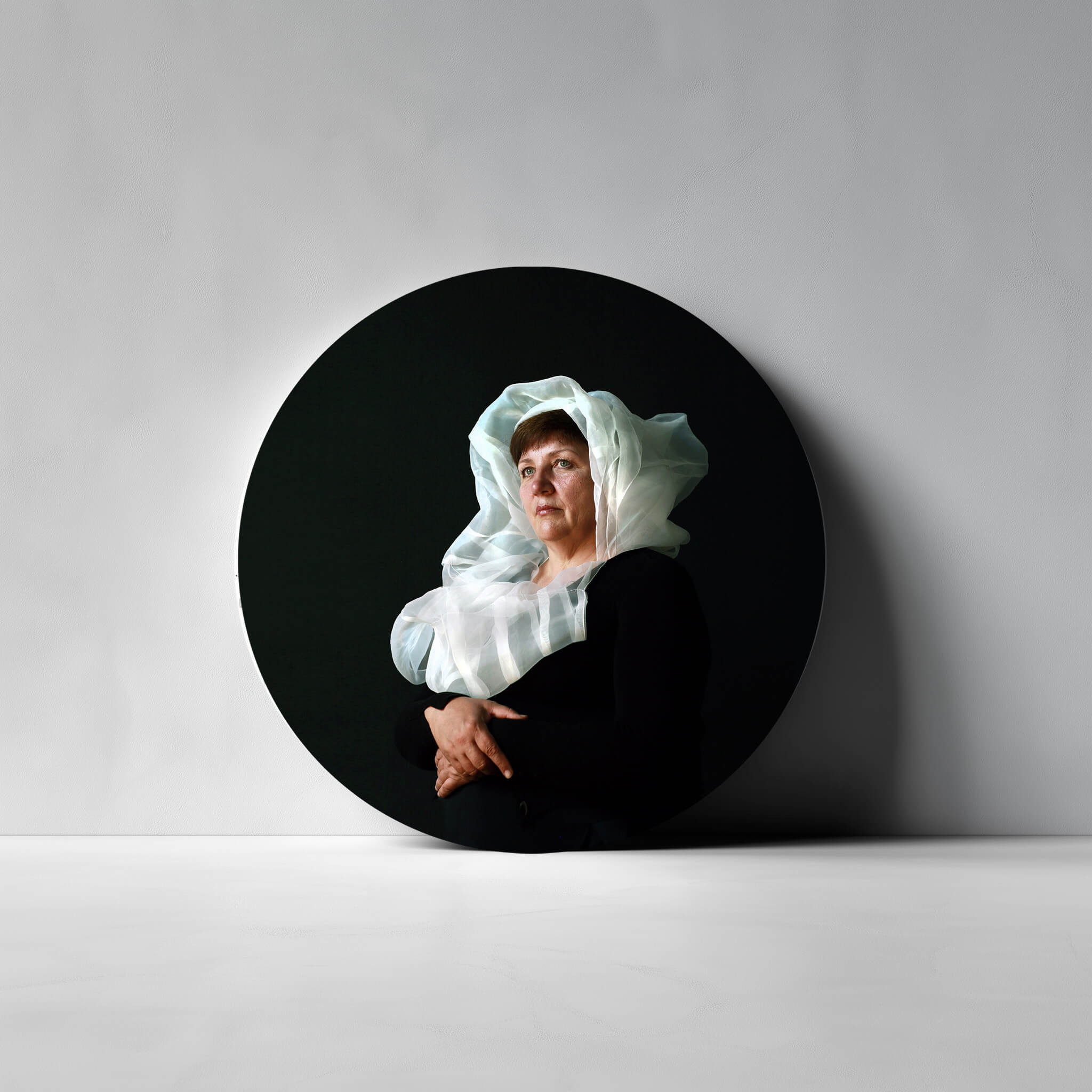
Values become practical. They decide the paper. The black ground. The scale. The amount of air around a face. The way a hand is placed. The refusal to over-explain. The patience to wait until the work stops performing and begins to breathe.
In portraiture, values become composition.
Dynasty
Dynasty is not only bloodline. It is responsibility across time. I come from a family of artists and art lecturers, and I was raised with the feeling that art is not a lifestyle accessory. It belongs to a longer conversation.
History enters my work through discipline. Through the old seriousness of the face. Through drapery, circles, black grounds, hands, flowers, veils, and the quiet architecture of the body. I do not use history to imitate the past. I use it to remember that people have always wanted to be seen with dignity.
The contemporary world is loud, fast, and often careless with image. Portraiture can resist that. It can slow the gaze down. It can give a person back their weight. The National Portrait Gallery’s guide to reading a portrait reminds us that clothing, pose, objects, background, and colour all carry meaning. This is why I care about every detail. Not because detail is decorative, but because detail is language.
A portrait is never neutral.
Beauty
Beauty is not prettiness. Prettiness asks to be liked quickly. Beauty can ask for more. It can hold grief, power, tenderness, age, memory, and contradiction. It also can be soft without being weak. Or it can be severe without being cold.
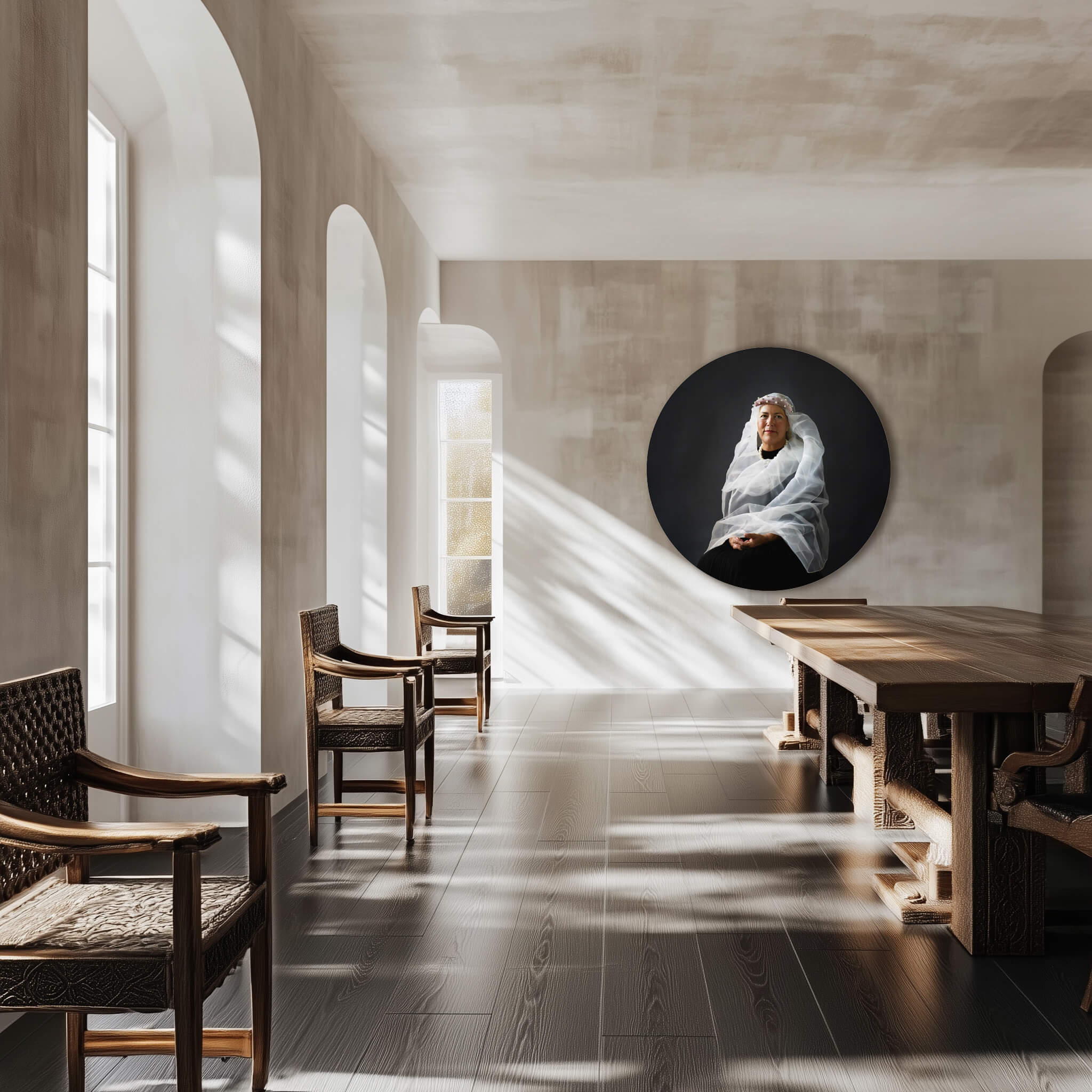
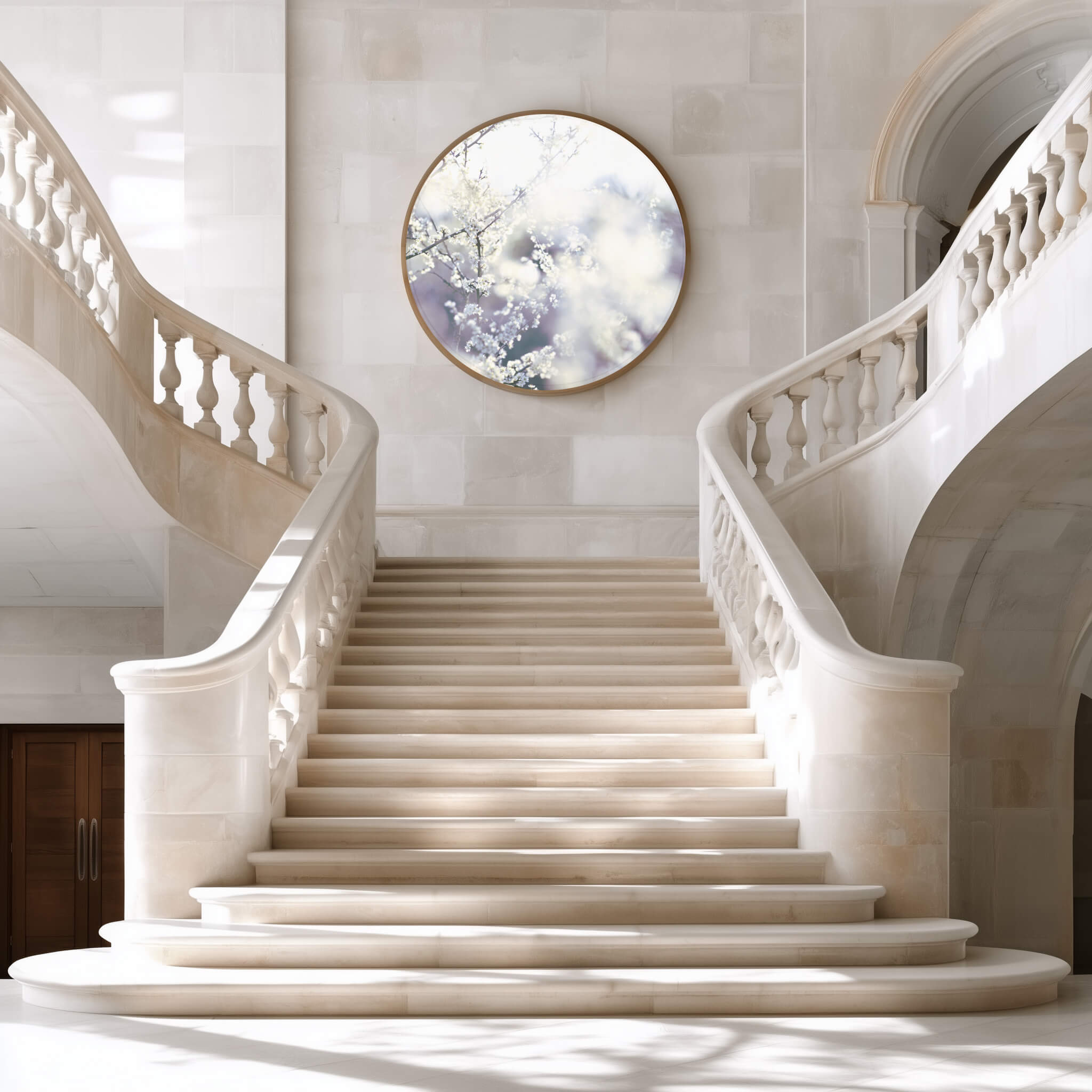
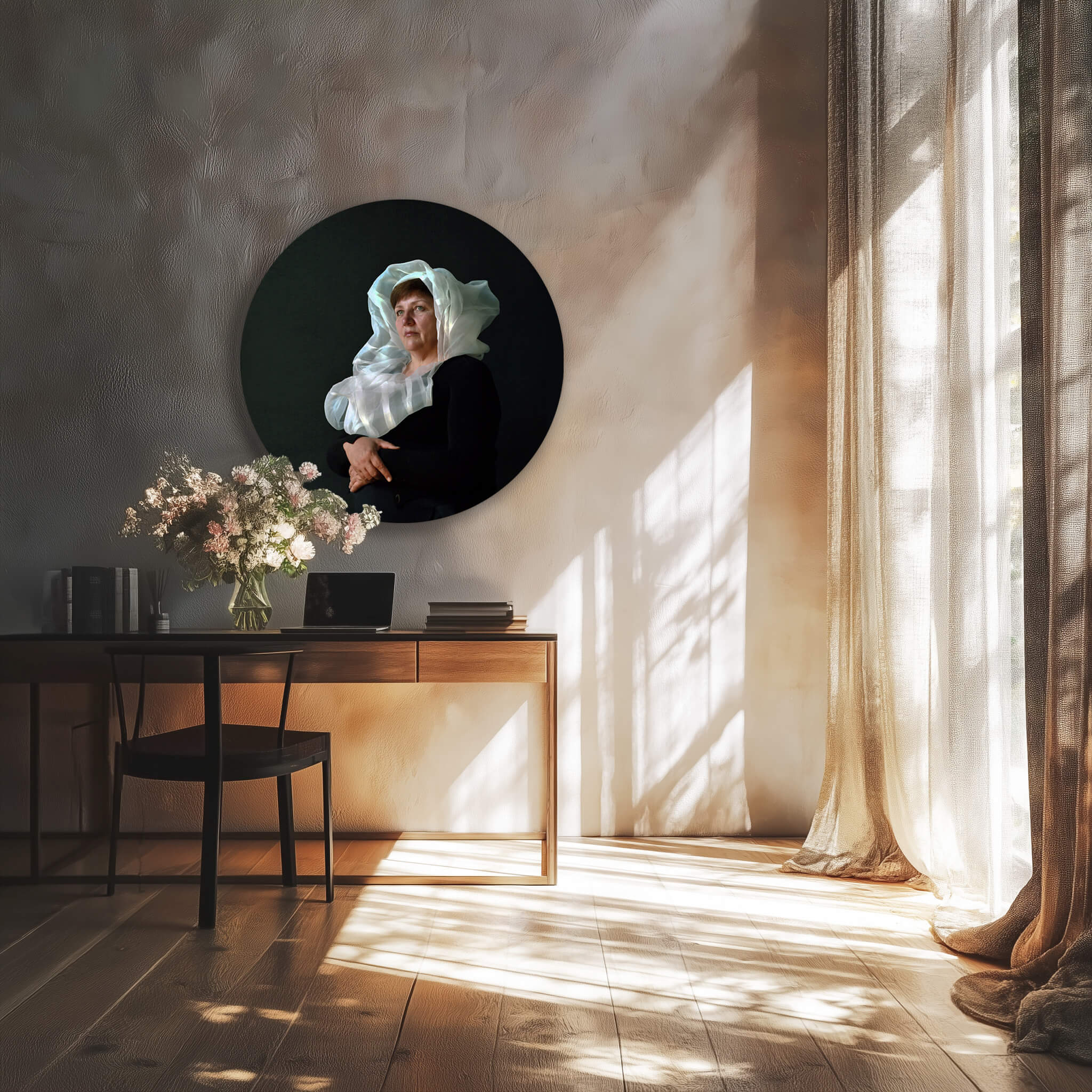
For me, beauty is not in the eye of the beholder, either. It is an absolute. A universal language. One white cloth instead of six. One flower when one is enough. A dark field that allows the face to appear slowly. A circular form that holds the subject like a private world. A room that becomes calmer because the artwork knows how to stand there.
This is also why my work is connected to psychology and interiors. Art changes a room because it changes what the room remembers. The right portrait does not simply match the sofa. It asks something of the person who lives with it. It may remind them of who they are becoming. It may protect a private part of them. It may mark a season of return.
This is the kind of beauty I trust.
Excellence
Excellence is care made visible. It is not perfectionism. Perfectionism often serves fear. Excellence serves the work. Excellence is choosing archival materials when no one would notice the cheaper option. It is retouching less when the truth of the face needs to remain. It is reprinting when the tone is almost right but not yet alive. Or having a particular emboss stamp for the certificate of authenticity. It is treating the collector with the same respect as the artwork.
It is also knowing when to stop. In portraiture, too much can become a form of disrespect. Too much drama, too much smoothing, too much explanation, too much cleverness. The work must be strong enough to hold silence.
What collectors feel before they know why
Collectors often speak first in atmosphere.
They say, “This feels like me.” Or, “I keep coming back to this one.” Or, “I don’t know why, but the room changed.”
I trust those sentences. They are often more honest than art vocabulary.
When a collector is drawn to a portrait or a print, they are not only choosing an image. They are choosing a kind of presence they want near them. A version of attention. A private symbol. A work that may sit beside them while they think, write, read, heal, work, parent, decide, rest, or begin again.
This is why I create works for spaces where you feel most yourself.
Not because art should be comfortable. Sometimes the most important art is not comfortable at all. But it should be true to the life it enters.
The studio test
Before I release a work, I ask a few questions.
Does it have presence? Does it need every element inside it? Does it respect the person, archetype, or atmosphere it carries? Would I still stand behind it in 10 years? And in 50? Would I want it in a room where someone is trying to return to themselves?
These questions are quiet, but they are strict. They help me decide what belongs to Archetype Archives, what belongs to Forest Frequencies, what belongs to Portrait Letter Club, and what should remain private in the studio a little longer.
A note on privacy
Portraiture is intimate. That is why privacy matters to me.
Not every work needs to be shown. Not every process needs to be made public. Not every collector story belongs online. A serious portrait practice must know the difference between visibility and exposure.
Some works are created for the world. Some are created for one room. Both can matter.
What my work knows before I do
Sometimes the work understands the direction before I can explain it.
It knows when I am trying to make something merely attractive. It knows when I am avoiding the harder sentence. It knows when a figure needs more darkness, more space, more restraint, or more courage.
That is the strange honesty of the studio. The work becomes a mirror before it becomes an artwork for someone else.
Dynasty. Beauty. Excellence.
I return to these words because they do not make the work easier. They make it truer. And when they enter the studio, the portrait changes.
So do I.
Continue inside the Atlanta Weiss world
If this way of seeing speaks to you, you are warmly invited to receive my (ir)regular Studio Notes, where I share new works, notes on artist values in portraiture, collecting, beauty, interiors, and the quiet return to oneself.
Portrait Letter Club sends monthly letters to your home (limited to 1000 subscribers). Subscribe by the 1st of the month to receive the next studio letter and collectible print.
You can also explore available fine art prints and limited editions from Archetype Archives and Forest Frequencies, created for spaces where you feel most yourself.
A field note from my studio—not advice. When I stopped painting “gloss” and let my core values (truth, care, courage) steer the portraits, polite work became work that met collectors like a mirror. History, beauty, excellence—and the small ritual that changed the room when the values finally entered.