

I make art for spaces where you feel most yourself because I know what it means to lose that feeling. By the age of twelve, I had lived in three countries with my artist family.
That sentence can sound beautiful from the outside. It carries movement, culture, languages, art, cities, new beginnings. And all of that was true. But it was also difficult.
Each new country meant starting again. New streets, new schools, new rooms, new rules, new voices around me, new codes of belonging. I had to learn what was safe, what was expected, what was hidden, what could be said, and what had to be understood without language.
Language was often the hardest part. When you cannot yet express yourself fluently, you begin to read the world differently. You listen with your eyes. You notice how people enter a room, the speed of a gesture, the tension in a mouth, the impatience behind politeness, and the kindness behind silence.
I learned early that a space can either give you back to yourself or take you further away. A room can calm you, make you perform, protect your nervous system, remind you who you are, or carry the emotional history of everyone who has passed through it. This is why interiors matter to me. Not as decoration, but as emotional architecture.
The gift of feeling a room
My father has a rare gift. He can feel a room. He can enter a place and sense something before it is spoken: the atmosphere, the weight, the light, the quiet pressure, the hidden harmony or disharmony.
He is a gifted landscape painter, and in his work he does not simply paint what a landscape looks like. He tries to capture what he feels there. The field behind the field, the silence behind the trees, the pressure of the sky, the intelligence of a hill, and the way a particular place changes your breathing before you have language for it.
In Russian art history, Isaac Levitan is often connected with the idea of “mood landscape” painting: landscape not as scenery only, but as emotional atmosphere. This is close to how I understand my father’s gift. He does not simply paint what a place looks like. He tries to carry what the place felt like into the work so that the person who later lives with the painting can feel something of that place too.
This shaped me deeply. I grew up understanding that art can transport atmosphere. A painting can hold a landscape. A portrait can hold a person. A room can hold a life. An artwork can hold a frequency you return to again and again, even when the world outside becomes too loud.
Places have power
Many cultures have understood that place matters.
In feng shui, the arrangement of space is connected to the movement of energy and the quality of life within it. In yoga and other contemplative traditions, the body is not separate from the space around it. Sacred landscapes, pilgrimage sites, groves, springs, mountains, temples, and thresholds have always carried meaning because human beings feel that certain places change us.
We may use different language for it now. Atmosphere, energy, presence, resonance, mood, nervous system, memory. But the human experience is old.
There are places that make you smaller, and there are places that make you remember your strength. There are places that invite grief, places that restore dignity, and places where the self returns without being forced. I am interested in this kind of place, not only outside us, but inside us.
Norval Foundation’s Sculpture Garden is especially relevant because it places three-dimensional artworks by artists from South Africa and across the continent inside a protected Cape lowland freshwater wetland with indigenous flora. This directly supports your idea that art and nature can work together as places of restoration.
Chinese landscape painting also understands landscape as more than a view. The Palace Museum’s writing on Spring Outing reminds us how deeply landscape belongs to cultural memory, movement, season, and human experience.
The place of power within
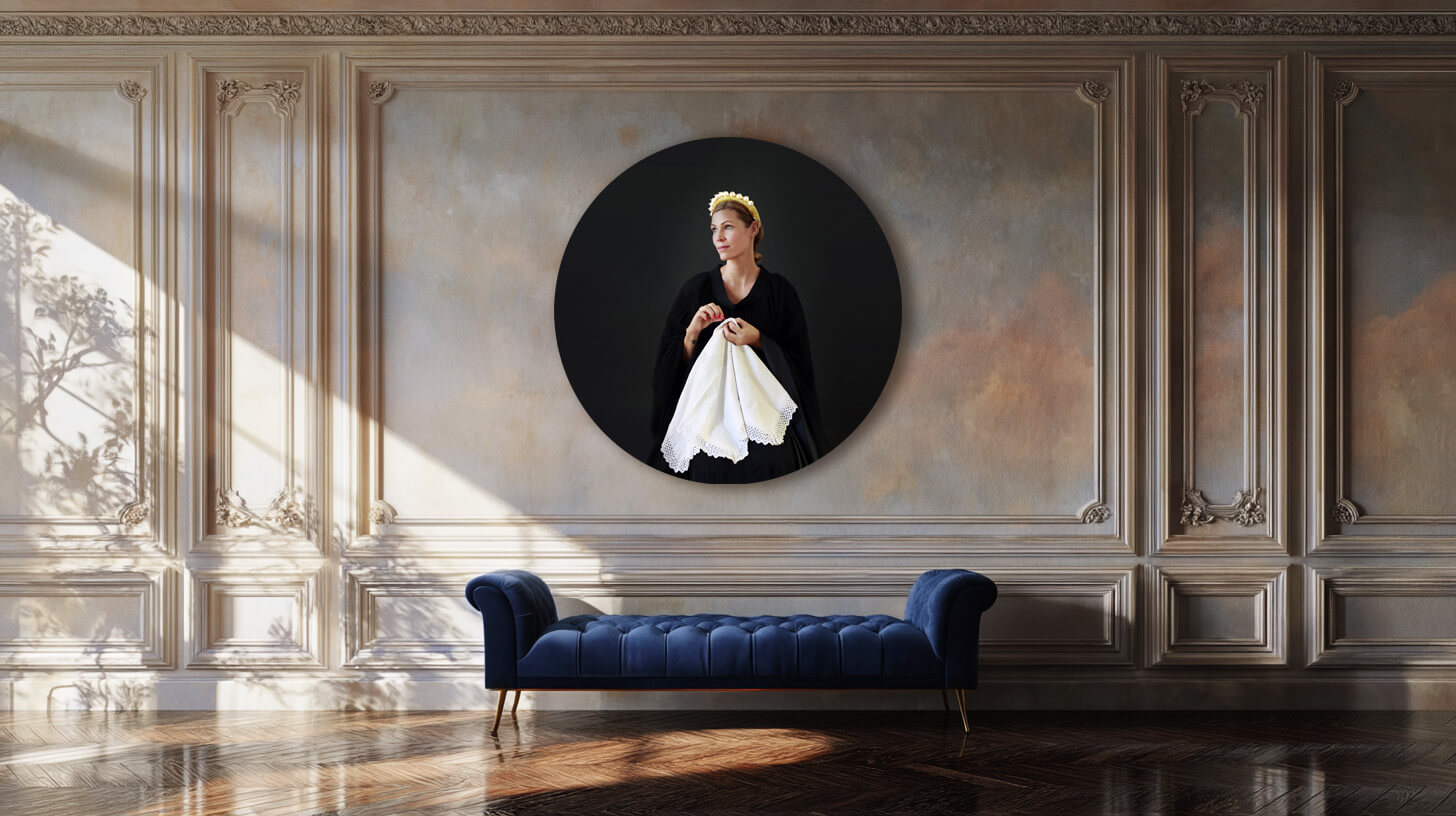
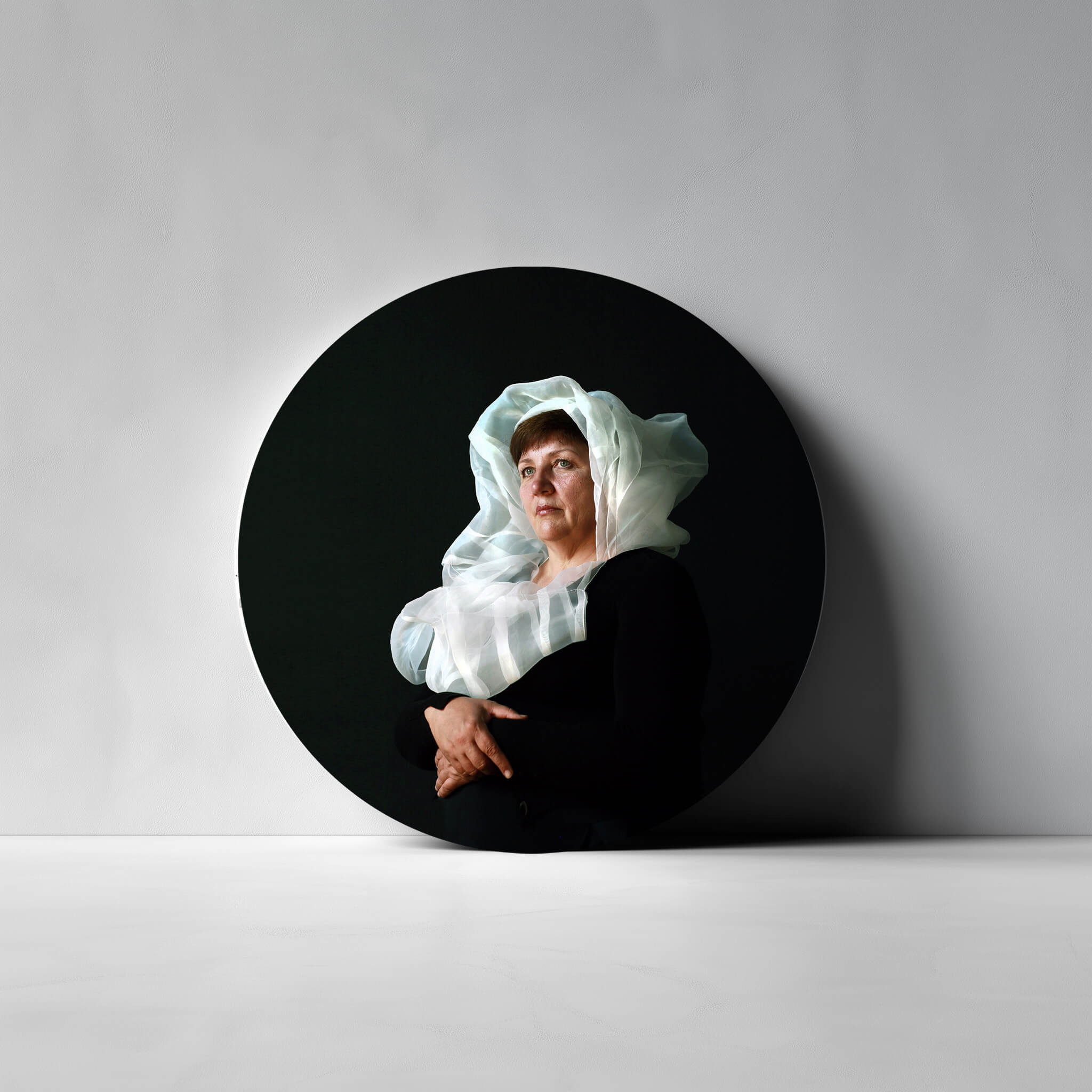
My series Archetype Archives works with the place of power from within. These works are not portraits in the usual sense. They are inner figures, emotional roles, psychological positions. Parts of the self that can lead, protect, soften, endure, return, begin, hold, or transform.
The Creator, The Matriarch, The Oracle, The Rose, The Becoming, and The Guardian are not decorative figures to me. They are inner rooms. Each archetype is a place you can stand inside.
The Creator is the place where something begins before it has permission. The Matriarch is the place where life is held, structured, protected, and carried. The Oracle is the place where intuition has already spoken, even if the mind has not caught up.
The Rose is the place where beauty remains open without becoming weak. The Becoming is the place between identities, where the old self no longer fits and the new one is not fully visible yet. The Guardian is the place that says: this matters, and I will protect it.
When someone lives with an archetype from this series, I hope the work becomes more than an image. I hope it becomes a point of return. A reminder of the role they are learning to inhabit. A mirror for the self that is trying to come forward.
This is what I mean by art for spaces where you feel most yourself. Not art that matches the sofa. Art that helps the room remember who you are becoming.
The power from nature
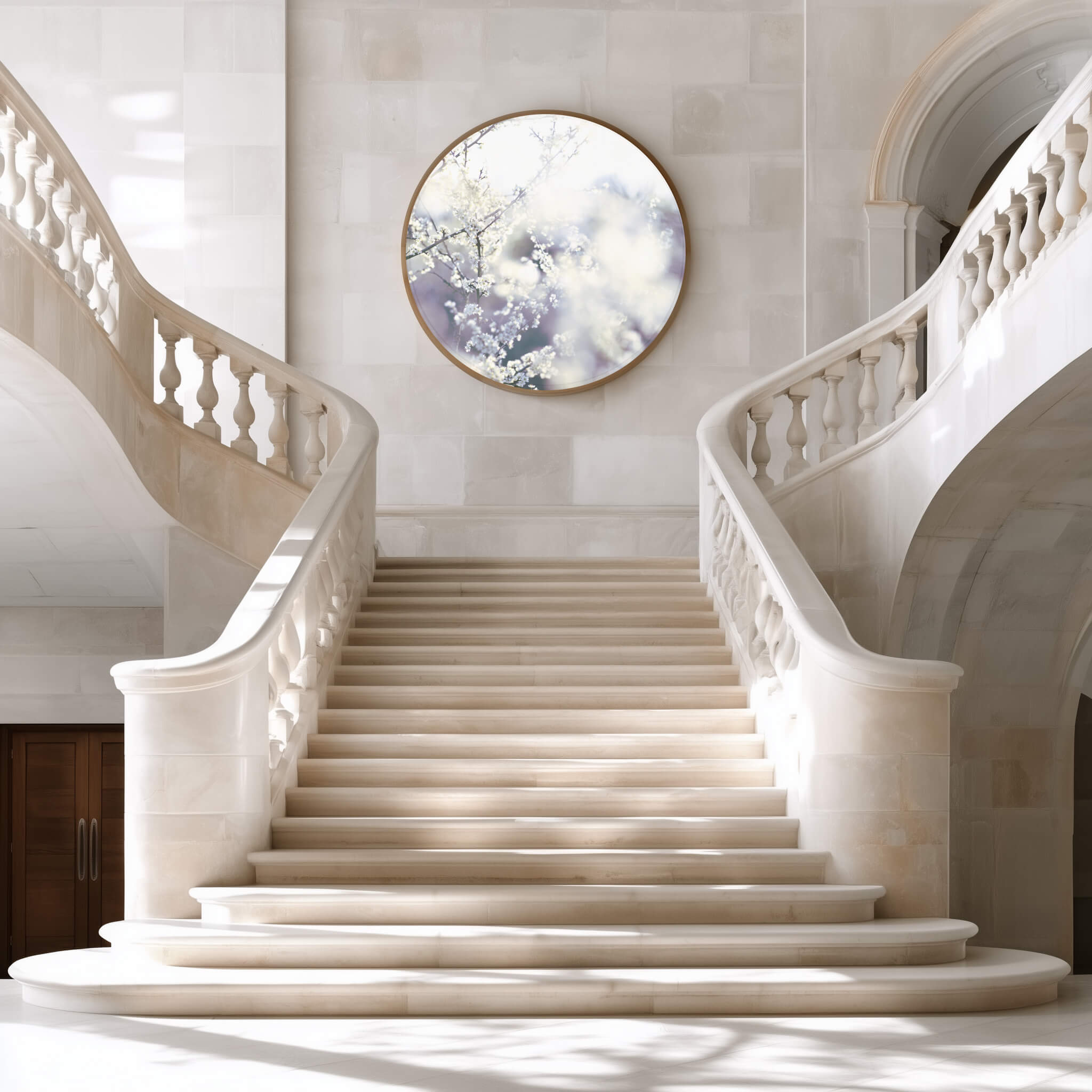
My Forest Frequencies series works differently. If Archetype Archives is about the place of power within, Forest Frequencies is about the power that comes from nature.
Forests have their own intelligence. They do not rush, explain, or perform. They are alive through relation: roots, shadows, air, moss, branches, decay, growth, silence, and light.
A forest can hold contradiction better than we can. It is both shelter and wilderness, stillness and movement, death and renewal, darkness and breathing. This is why forests feel less like scenery to me and more like living systems of restoration.
When I work with forest atmospheres, I am interested in what nature gives back to the human body. Not only visually, but emotionally. The lowering of noise, the widening of perception, and the feeling that life does not need to be solved every second to continue.
Forest Frequencies is about this. The artwork becomes a threshold into that quieter intelligence. A reminder that you are not only a mind managing tasks. You are also a body that belongs to the natural world, a cyclical being, and someone who is allowed to restore.
Why the home matters
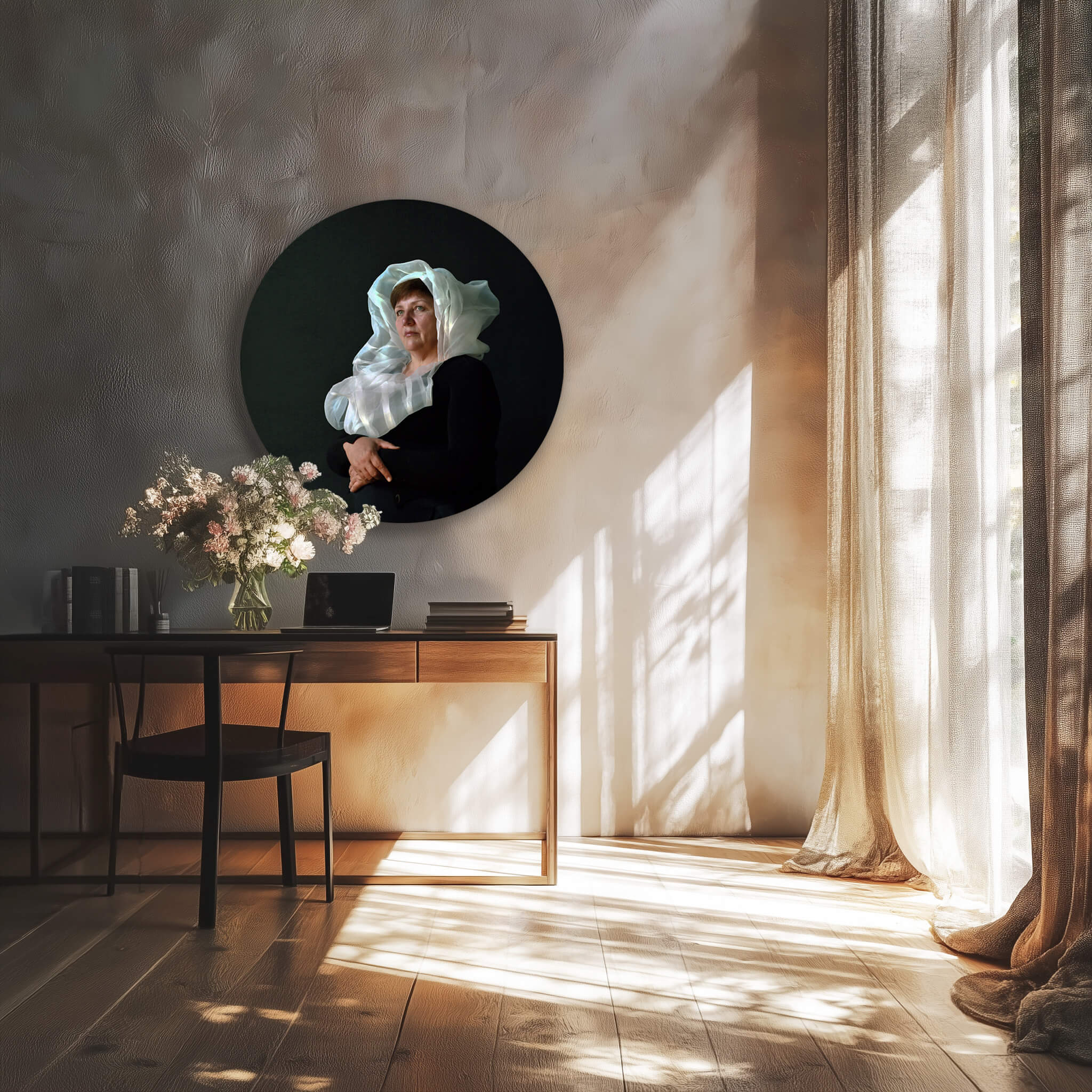
A home is not only a place where furniture stands. It is where the self is either supported or slowly eroded. The images we live with matter. The objects we pass every morning matter. The wall beside the desk, the artwork near the bed, the atmosphere of a hallway, and the light in a room all matter.
A home can quietly train us to remain disconnected from ourselves. Or it can help us return. This is why I believe art for interiors should be more than decorative. Decoration can be beautiful, but it is not enough for me.
I am interested in artwork that changes the emotional temperature of a room. A work can create focus, protection, softness, dignity, or a threshold. It can make a room feel less anonymous and more alive. When chosen well, an artwork becomes one of the quiet authorities in a home.
It does not shout. It holds.
Art as emotional architecture
I often think of artwork as emotional architecture. Architecture shapes how the body moves through space. Art shapes how the inner life moves through space.
A strong artwork can anchor a room. It can give the eye somewhere to rest. It can make silence feel intentional instead of empty. It can make beauty feel serious and give a private life a visible centre.
This is especially important in a time when so much of life is fragmented. We move between screens, obligations, roles, messages, expectations, and identities. It is easy to become scattered. It is easy to forget what kind of life we are actually trying to build.
The right artwork can interrupt that quietly. You pass it, and something in you remembers. This is why I care about rooms. The room is where the artwork and the person meet every day.
Feeling most yourself is not always comfort
When I say I make art for spaces where you feel most yourself, I do not mean only spaces that feel soft, easy, or comforting. Sometimes feeling most yourself means feeling braver, clearer, more honest, and less available for what drains you.
It can mean being more willing to protect what matters. More able to grieve. More able to begin. More able to stop performing.
A true space of return is not always gentle in the sentimental sense. It can be strong. It can ask something of you. It can remind you of a standard you are not willing to abandon.
This is why the artworks are not only soothing. Some are tender, protective, watchful, ceremonial, or almost severe. Because the self is not one mood. The self is a whole inner landscape.
Why beauty belongs here
Beauty matters because it gives the soul a form of orientation. I do not believe beauty is superficial. Beauty can be discipline, devotion, and a refusal to let the world become purely functional, cynical, or careless.
Beauty can remind us that life is not only survival. It can lift the room and the person inside the room. But beauty must have depth. It cannot be only pleasant surface.
The beauty I trust has to carry presence, tension, memory, silence, or truth. Otherwise it becomes decoration without power. The beauty I trust is not fragile. It has roots. It knows something.
What I want the artwork to do
When I create a work, I think about what it might do inside someone’s life.
Will it make the room feel more present? Will it give the collector a place to return to? Will it hold a quality they need near them? Will it become part of a morning ritual, a reading corner, a studio wall, a bedroom, a hallway, or a room where decisions are made?
Will it carry something from my studio into their private world without violating the privacy of either? I want the work to become a companion, a witness, a mirror, a threshold, and a small place of power.
A space where you feel most yourself
A space where you feel most yourself is not necessarily perfect. It may not be large. It may not be finished. It may not look like a magazine. It may still be in progress, like you.
But it has honesty. It contains things that mean something. It allows your nervous system to soften, your ambition to breathe, your grief to exist without shame, and your beauty to return without performance. It allows you to remember what you are building and why.
This is the kind of space I make art for. For the collector who is not only filling a wall, but forming a life. For the person who wants to live with images that carry recognition. For the room that needs a centre. For the self that is coming back.
The two directions of my work
At this stage, I see two strong directions in my work. Archetype Archives carries the power from within. Forest Frequencies carries the power from nature.
One works through inner figures. The other works through natural atmosphere. One asks: which part of you is ready to return? The other asks: what does nature know that you have forgotten?
Together, they create a dialogue between the inner world and the living world. The archetype and the forest. The face and the atmosphere. The room and the landscape. The human self and the larger intelligence around it.
This is the territory I want to explore more deeply.
A private invitation
If my work belongs in your space, I hope it does not only look beautiful there. I hope it changes the way the room feels. I hope it gives you a point of return. I hope it reminds you of something you already know but sometimes forget.
You are not only your tasks, your history, your roles, what happened to you, or what others expect from you. You are also the person who can choose what enters your space.
You are also the person who can build a room around dignity, beauty, strength, softness, memory, and return.
That is why I make art for spaces where you feel most yourself.