

A face can unlock a telephone and still tell us almost nothing about the person holding it.
That distance between identification and understanding is where my interest in contemporary portrait art begins.
We encounter faces constantly: screens, advertising, family photographs, public archives, generated images and in the endless visual theatre of modern life. Yet the circulation of a likeness does not necessarily deepen our knowledge of a person.
Visibility can coexist with profound anonymity.
Portraiture asks what sustained attention might make possible. Who determines how a person appears? What remains private? And how can an image acknowledge someone without pretending to explain them completely?
That is the paradox of our time. We lack attention. Not images.
Portraiture as an encounter
A portrait represents a particular person, but representation always involves decisions. Framing, scale, medium, gesture and setting shape the terms on which someone becomes visible.
The National Portrait Gallery’s guide to reading portraits draws attention to clothing, pose, expression, objects, background and colour. These elements help construct meaning; they do more than describe appearance.
For me, portraiture begins with this relationship between artist, sitter and viewer. Each brings intentions and expectations. None can fully determine what the others will see.
Contemporary portrait art can be painted, drawn, photographed, filmed, sculpted, digitally created or developed across several media. It can offer a recognisable likeness or question how much a likeness allows us to know.
The question extends beyond appearance: what kind of self is being made visible, and through whose interpretation?
Visibility and recognition
For many people, managing a public image has become an ordinary part of daily life. We select photographs, adjust colour, crop the frame and decide which version of ourselves a particular audience will encounter.
The profile picture becomes a small exercise in self-presentation. It may communicate confidence, approachability, authority or belonging before a conversation begins.
But exposure is not the same as recognition. An image can circulate widely while telling us little about the person represented.
What interests me in portraiture is its capacity to sustain an encounter beyond that first impression. A gesture becomes less certain. An expression resists the description we initially gave it. We begin to notice our own assumptions.
By being seen, I mean being recognised without being reduced to a role or a single interpretation. This is one of the possibilities I value most in portraiture: it can make someone present while allowing aspects of their life to remain private.
The person should remain more than the image.
Portraiture as a record of power
Portraiture has a long relationship with authority. Rulers, patrons, merchants, political leaders and families have commissioned images to establish how they wished to be encountered and remembered.
A portrait could assert legitimacy, inheritance, achievement or belonging. Its scale, materials, setting and eventual location helped determine the force of that assertion.
This history is complicated. Portraiture has reinforced hierarchy and exclusion, while also preserving tenderness, resistance and lives that might otherwise have received little attention.
Contemporary portraiture inherits these tensions. Questions of gender, race, class and cultural authority enter the image through decisions about who is represented, who commissions the work and where it is shown.
A portrait is therefore also a negotiation with visibility. Who receives sustained attention? Who decides the terms? And whose account of a person survives?
Portraiture and identity
A portrait fixes an appearance at a particular moment; the person continues to change.
We are shaped by language, memory, relationships and the roles we learn to inhabit. Professional, familial, private and public identities can coexist without fully agreeing.
Portraiture gives these tensions a visible form. Posture can suggest authority while a gesture introduces hesitation. Formal clothing may establish a social position that the expression unsettles. What seems composed at first can become more ambiguous with time.
I am interested in that ambiguity. It allows identity to remain unfinished.
A portrait need not resolve the relationship between who someone has been, who they appear to be and who they are becoming. Sometimes its value lies in allowing those possibilities to occupy the same space.
The portrait as mirror
The viewer also participates in the work.
We bring our memories, cultural expectations and experiences of being looked at. We may recognise authority, vulnerability or defiance in an image because those qualities already have meaning in our own lives.
That recognition can be revealing. It can also be mistaken. An expression we read as confidence may suggest distance to someone else.
This is why certain portraits remain compelling even when we know little about the sitter. We recognise something of our own experience, then encounter something that resists it.
A portrait can become a mirror without being a self-portrait. It can help us name a feeling or question a judgement. Its meaning develops between what the artist has made, what the sitter offers and what the viewer brings.
Portraiture in the age of generated images
A convincing face is no longer evidence that a person stood before a camera. Generated images bring renewed urgency to questions of authorship, consent and the relationship between an image and its subject.
For portraiture, these questions reach beyond technique. What encounter, if any, underlies the work? How has the sitter participated? What has been transformed, and what does the artist disclose about that transformation?
My own commitment is to the attention a portrait requires: the decisions, uncertainties and responsibilities involved in representing another person. Technical polish cannot settle those questions.
The more readily an image can be produced, the more carefully I want to consider the conditions of its making.
Beauty and the evidence of life: The problem with perfect images
A portrait can be polished until the particularity of a person begins to disappear.
When every line is softened, every asymmetry corrected and every sign of fatigue removed, we should ask what the image has gained—and what it has lost.
I value beauty. In portraiture, I want it to accommodate the evidence of a life: age, tenderness, discipline, uncertainty, grief and desire.
This does not require exposing everything. Careful representation involves choices about what to reveal, what to leave unresolved and what to protect.
The beauty I trust allows complexity to remain visible.
Portraiture and privacy
A meaningful portrait can remain private.
It may belong to a family, a particular room or one person’s understanding of a significant moment. Its importance does not depend on an audience beyond that relationship.
In commissioned portraiture, I consider privacy part of the conversation from the beginning. Making the work, exhibiting it and sharing its story are distinct decisions.
The sitter’s willingness to be represented should never be treated as an unlimited invitation to circulate their image.
This is a matter of artistic responsibility as well as personal trust. A portrait can invite attention while respecting the boundaries of the person it represents.
Living with a portrait
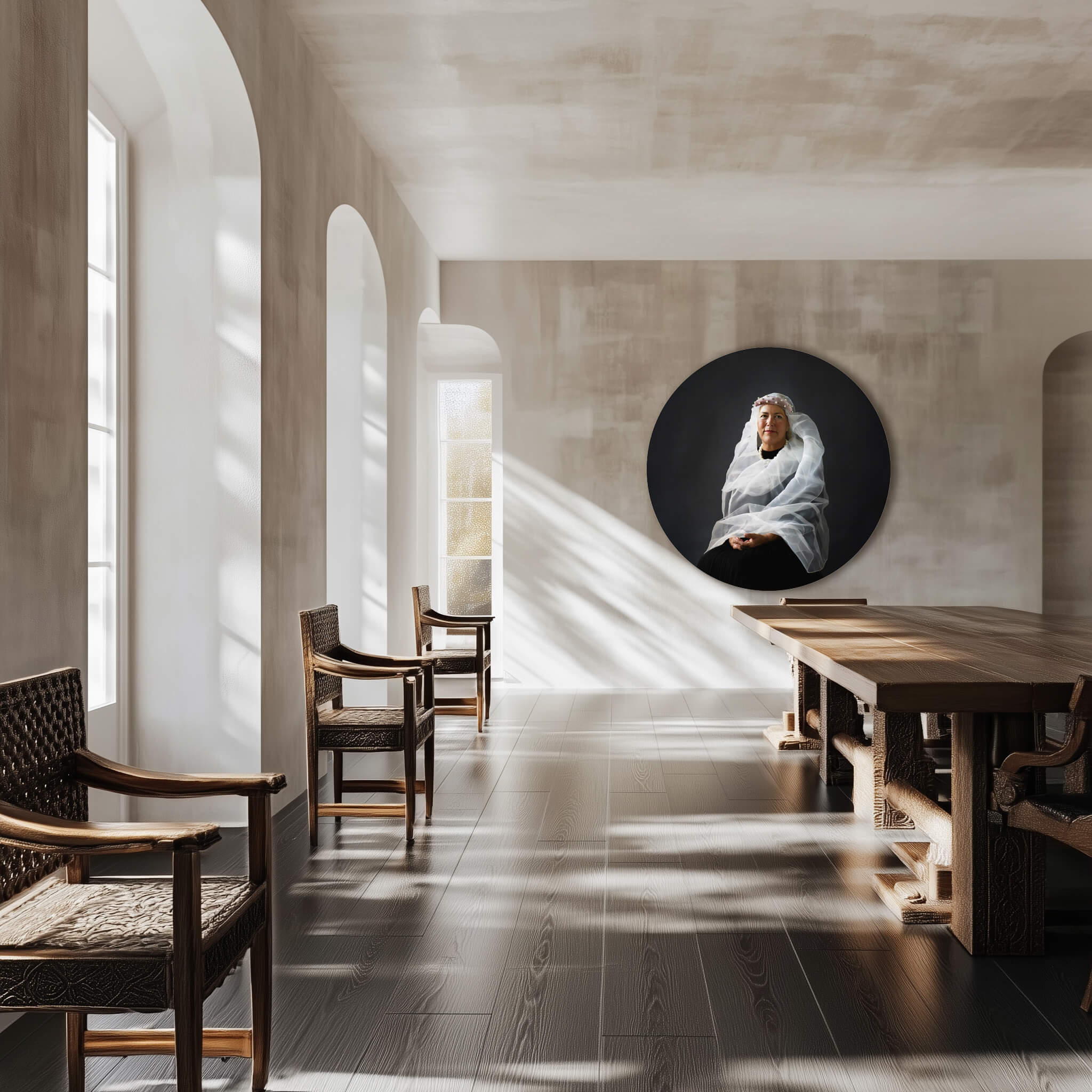
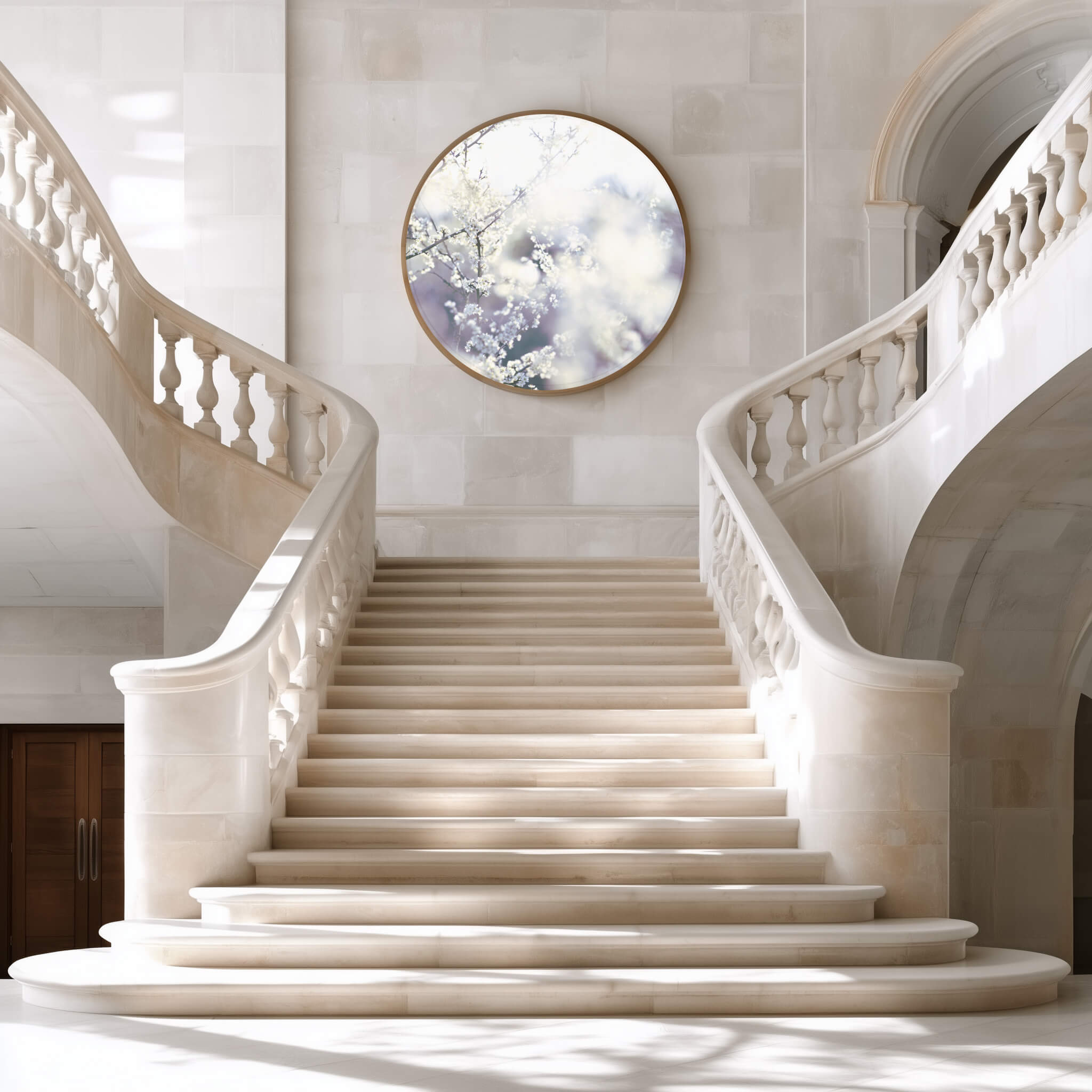
A portrait enters into a relationship with the space around it.
Scale, light and placement affect how we encounter the work. Seen from a doorway, a figure may seem distant or watchful. Encountered at close range, the same image may become intimate.
I think about this when making work. Where will the portrait live? Will it be encountered in passing or during long periods of quiet? What relationship might develop between the image and the daily life around it?
This is part of what I mean by emotional architecture: the way an artwork participates in the felt character of a place.
Living with a portrait also introduces time. A work becomes familiar without necessarily becoming fully understood. Details recede and return. Our circumstances change, and with them the qualities we notice.
The relationship continues after the work leaves the studio.
The portrait as an inheritance
People have always wanted to leave traces.
A portrait may eventually be encountered by someone who never knew its subject. For one generation, it holds the face of a parent or partner. For another, it becomes an image of a person known through stories. Later, it may survive with only fragments of that context.
This gives portraiture a particular responsibility. The work carries an interpretation forward, sometimes beyond the lives of both artist and sitter.
It cannot preserve an entire person. It can preserve a considered encounter with them—and leave future viewers something to question, recognise and remember.
That is a serious responsibility.
My own relationship to portraiture
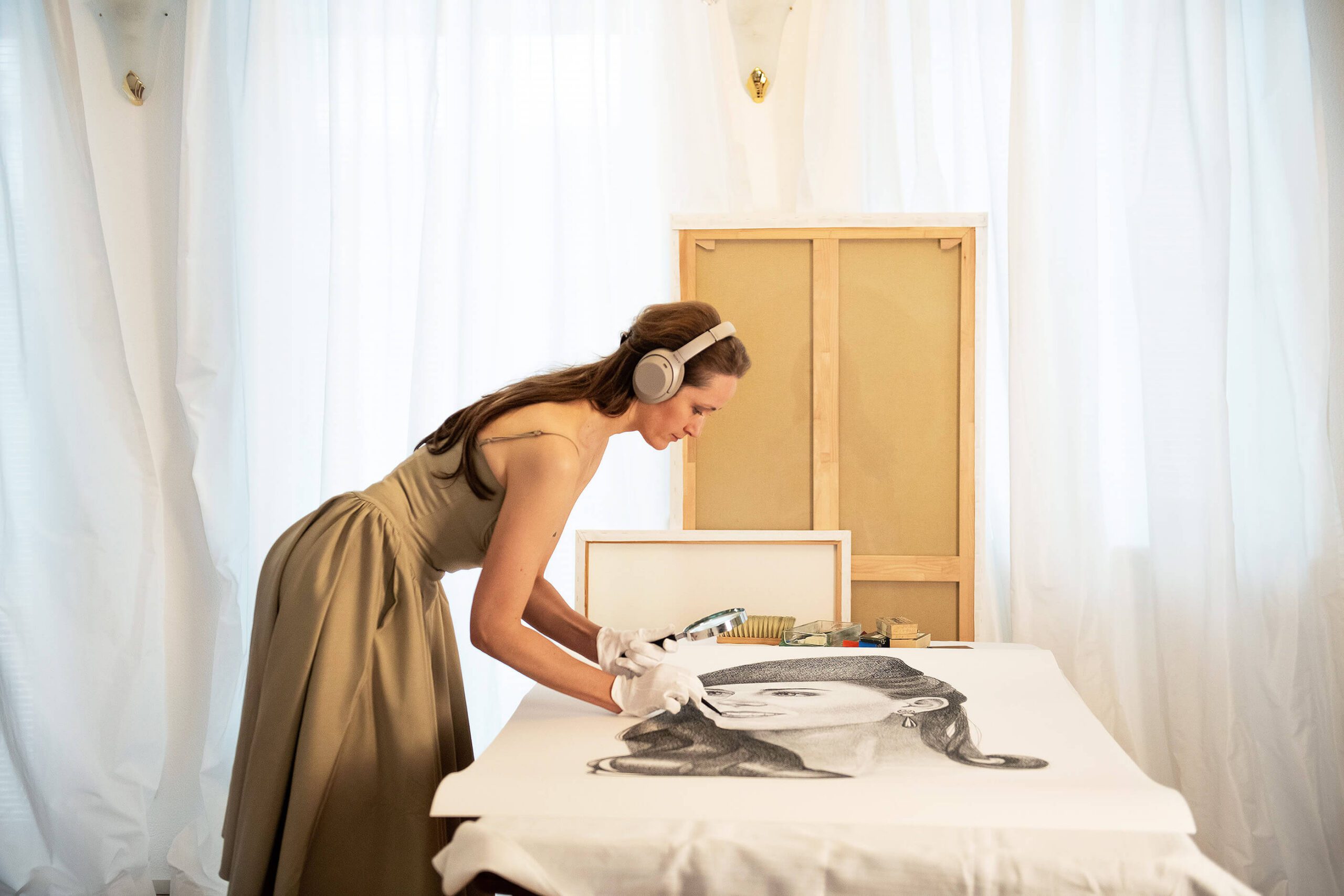
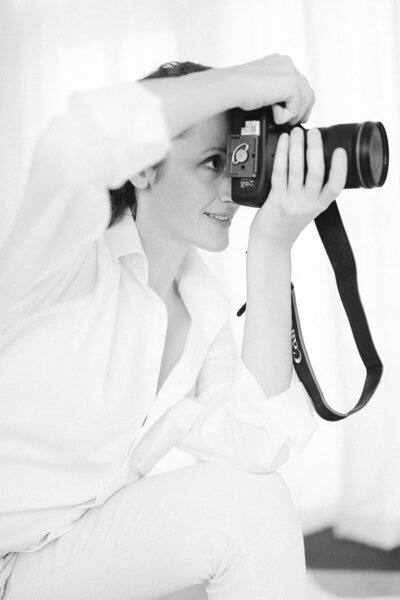
I grew up in an artist family, surrounded by close looking: attention to expression, posture, light, proportion and the atmosphere of a room.
By the age of twelve, I had lived in three countries. At the beginning of each move, language was not always available to me. I learned to pay attention to faces, gestures, tone and distance while I found my way into new words.
For a long time, I assumed everyone watched this closely. Only later did I understand how connected that habit was to my upbringing: watching artists work, moving between languages, learning to notice before I could confidently speak.
Attention did not give me certainty about other people. It gave me questions.
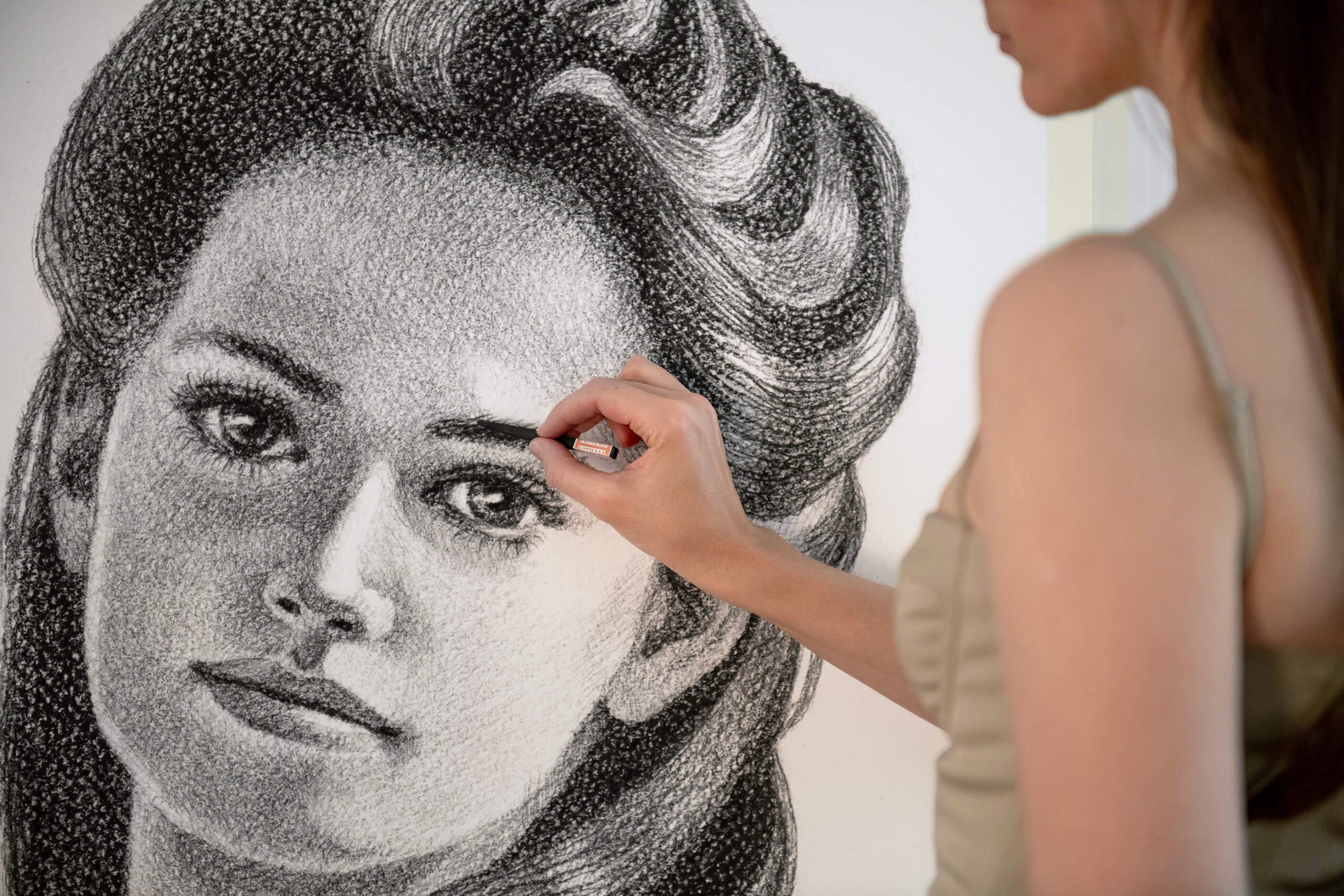
That remains central to my practice. I am interested in the human image as a meeting point of identity, memory and reputation—and in the distance between what a person offers to view and what another person believes they see.
Archetype Archives and the inner portrait
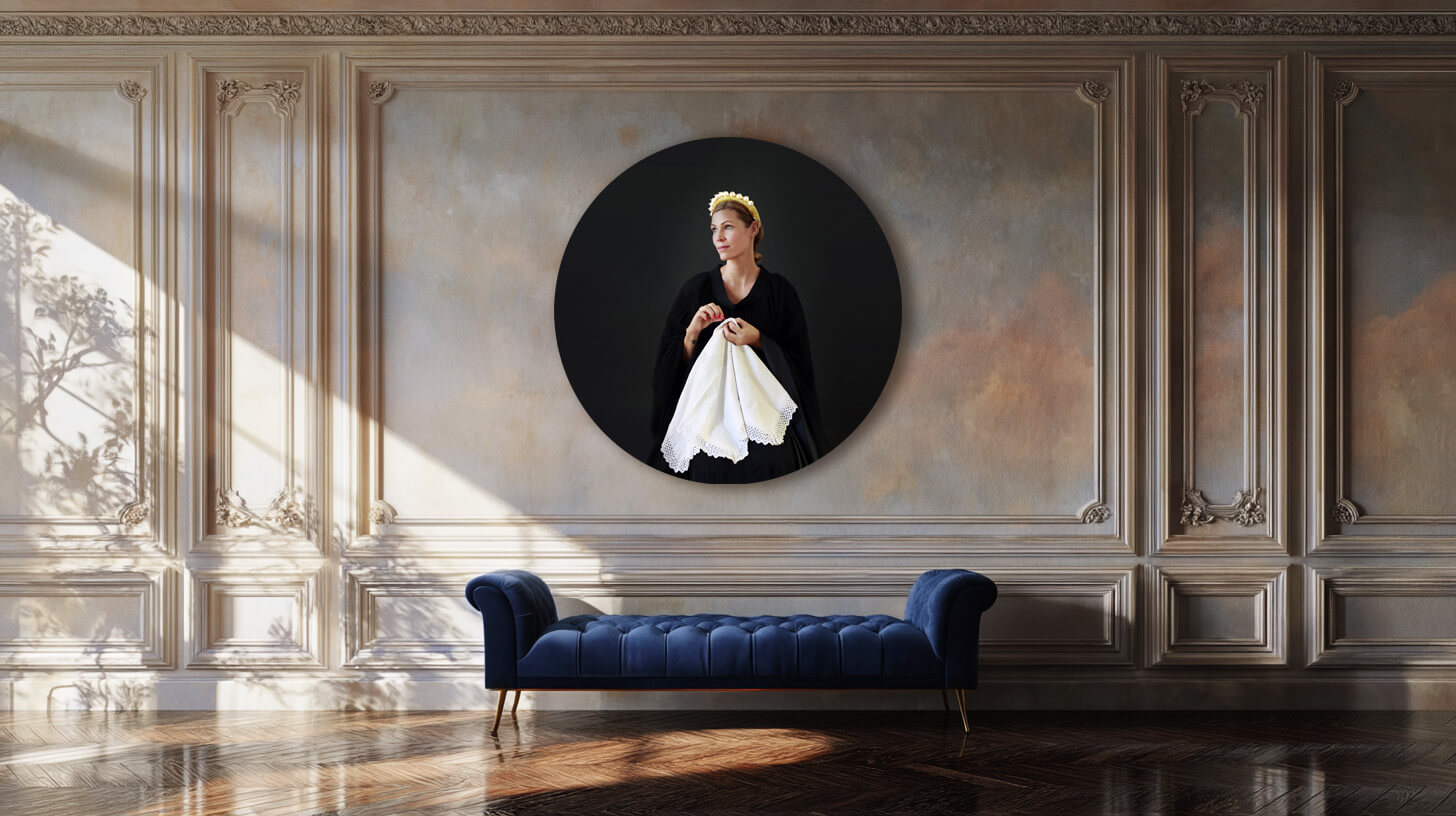
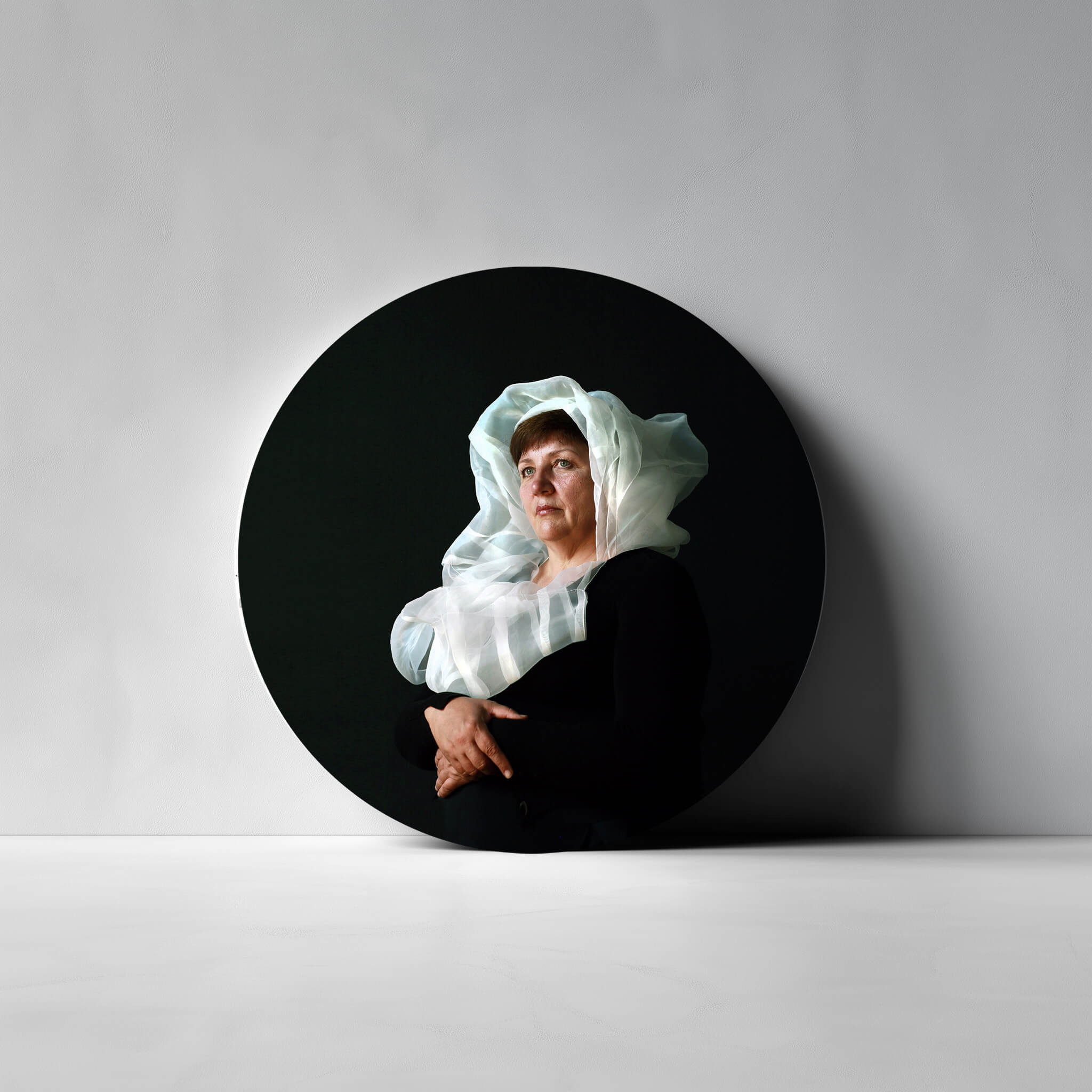
In my series Archetype Archives, I explore these questions through symbolic figures.
The Creator, The Matriarch, The Oracle, The Rose, The Becoming and The Guardian give form to different possibilities: beginning, protecting, trusting, opening, changing and holding a boundary.
I use these figures as artistic propositions. Their significance develops through the viewer’s experience; recognition may be immediate, uncertain or absent. That openness matters to the work.
A figure may recall a role someone already inhabits or suggest one they are beginning to consider. It may also resist the meaning implied by its title.
I hope the works allow that movement. The face becomes a place where individual presence and symbolic interpretation meet, without either fully containing the other.
What a portrait asks of us
Portraiture matters because an image can influence how a person is encountered, remembered and understood. That influence deserves scrutiny—and care.
For me, its contemporary relevance lies in keeping interpretation open. A portrait can offer recognition while allowing the person represented to remain complex, contradictory and partly unknown.
Living with such a work extends the encounter. What first appears to be confidence may later suggest restraint. A gesture becomes more ambiguous. Familiarity gives you further questions.
If you are considering a portrait commission, I welcome a conversation about whom the work will represent, where it will live and what should remain private. I accept a small number of commissions each year.
Enquire about a portrait commission →
To encounter these questions through an existing body of work, explore Archetype Archives →
A face can unlock a telephone without telling us who a person is. Atlanta Weiss explores what contemporary portraiture asks of artists, sitters and viewers: questions of identity, power, privacy and the limits of representation.