ATLANTA WEISS

The Journal

Limited-Edition Artworks: What Collectors Should Know

filed under:

Collecting

Hi, I'm Atlanta Weiss, a visual artist based in Cologne, Germany. So glad you're here.

Limited-edition artworks can be a beautiful way to begin or deepen an art collection.

They offer a clear threshold: more accessible than a large original, more intentional than mass decoration, and often deeply connected to an artist’s larger world.

But not every edition is the same.

A limited-edition artwork may be a fine art print, a photographic work, a circular portrait piece, a hand-finished edition, an object, or another artwork created in a fixed number. What matters is not only the medium, but the integrity of the edition.

For collectors, the question is not only: Do I like this image?

The better questions are:

  • What is the edition? How many works exist?
  • How was it made? What materials were used?
  • Is it signed, numbered, or accompanied by a certificate?
  • Does it belong to a serious body of work?
  • Can I imagine living with it slowly?

Limited-edition artworks are not only a more accessible way to collect. At their best, they are a way to enter an artist’s world with clarity, care, and recognition.

What are limited-edition artworks?

Tate describes an edition as a copy or replica of an artwork made from a master, often referring to a series of identical impressions or prints made from the same source. Christie’s guide to prints and multiples explains that prints are artworks made in multiple iterations through a transfer process, with techniques such as etching, lithography, screenprint, and woodcut.

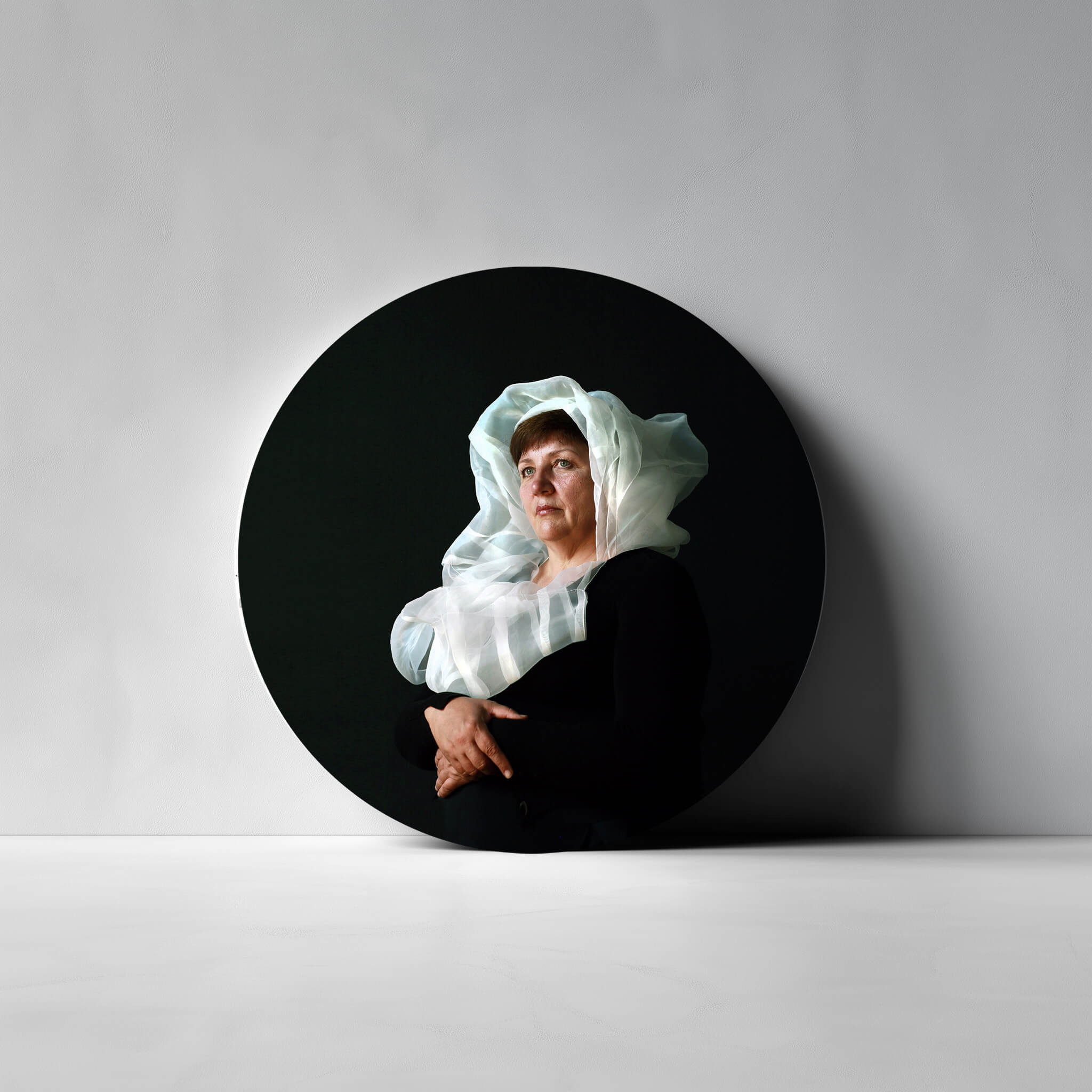
I mention prints here because they are one important form of limited-edition artwork, but not the only one. A limited-edition artwork may also be a photographic work, a hand-finished edition, a circular portrait piece, an object, or another work created in a fixed number.

Artsy has written about editions as a way to collect works by otherwise difficult-to-access artists. This is one reason editions matter: they can offer collectors a thoughtful threshold into an artist’s world without reducing the work to decoration or mass reproduction.

Why limited-edition artworks matter to collectors

Limited-edition artworks matter because they allow more people to collect serious art without beginning with the price of a large original.

Limited-edition artworks are works created in a fixed number. Once the edition is complete, no more artworks from that exact edition should be produced. This limit gives the work structure, rarity, and collector meaning. The edition may be small or larger. It may be signed, numbered, accompanied by a certificate of authenticity, or presented with additional notes from the artist. For example, 5/30 means your work is the fifth piece in an edition of thirty.

This does not automatically mean number 1 is better than number 30. What matters more is the quality of the artwork, the integrity of the edition, the artist’s practice, the condition of the work, and the clarity of its documentation.

A limited edition is a promise. It tells the collector: this work belongs to a defined group. It is not endlessly reproduced. It has a place inside the artist’s archive.

A strong edition can carry the atmosphere, subject, and values of the artist’s work with great strength. It can bring a body of work into a private room, a library, a bedroom, a hallway, or the place where you think, work, read, write, and return to yourself.

For many collectors, limited-edition artworks are the beginning of a personal collection.

One work enters the room. Then the room changes. Then your eye changes.

You begin to notice what kind of art you want near you. You begin to understand whether you are drawn to portraiture, forest atmospheres, quiet interiors, archetypes, symbols, light, darkness, softness, strength, or works that feel like private mirrors.

This is why editions are not only a practical entry point. They can become the first honest sentence of a collection.

Limited-edition artworks are not decoration

An artwork can decorate a wall. But a serious artwork does more.

It gives a room a point of attention. It changes the emotional temperature. It may bring stillness, concentration, memory, beauty, protection, or a sense of return.

This is the difference between buying something to fill a space and choosing something because the space feels incomplete without it.

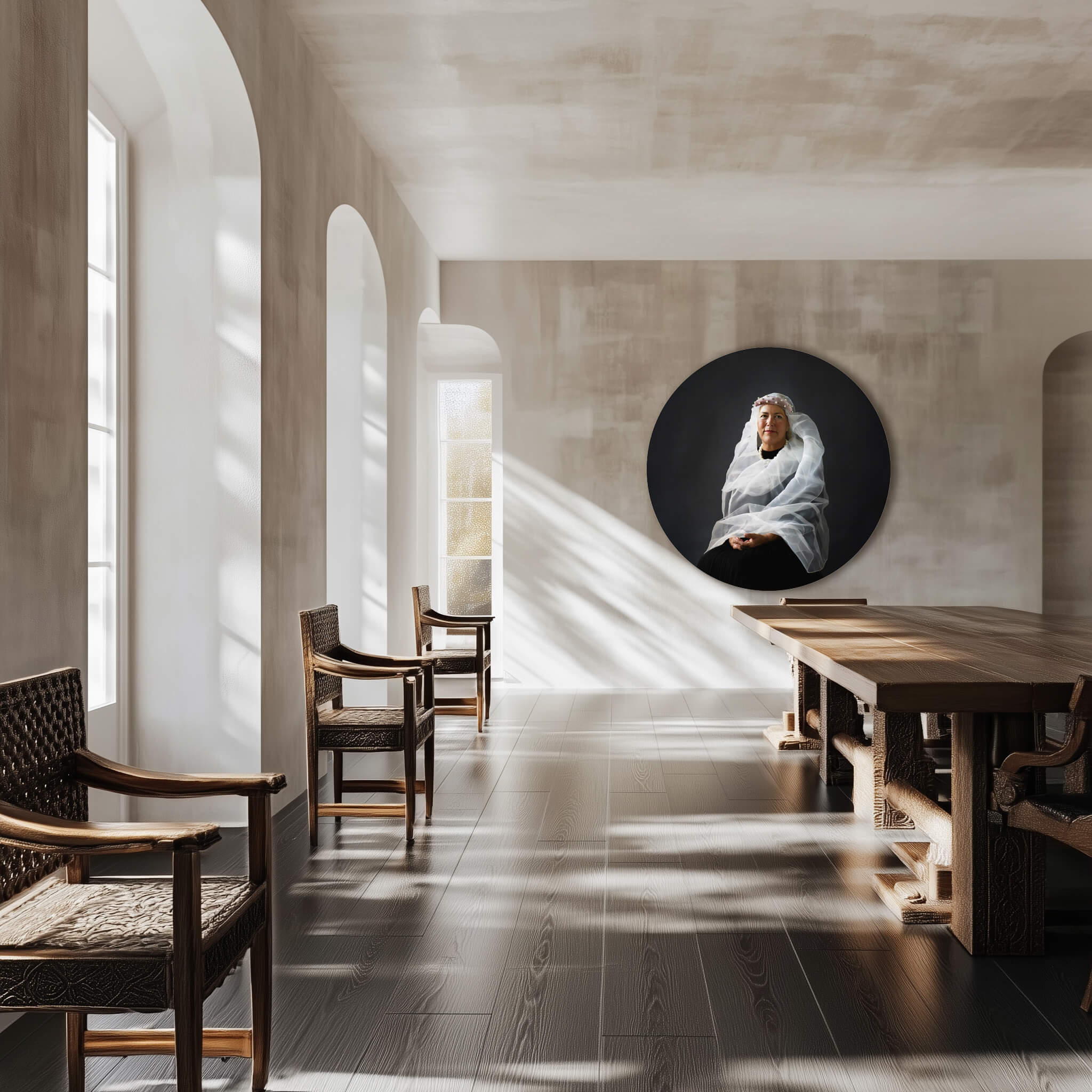
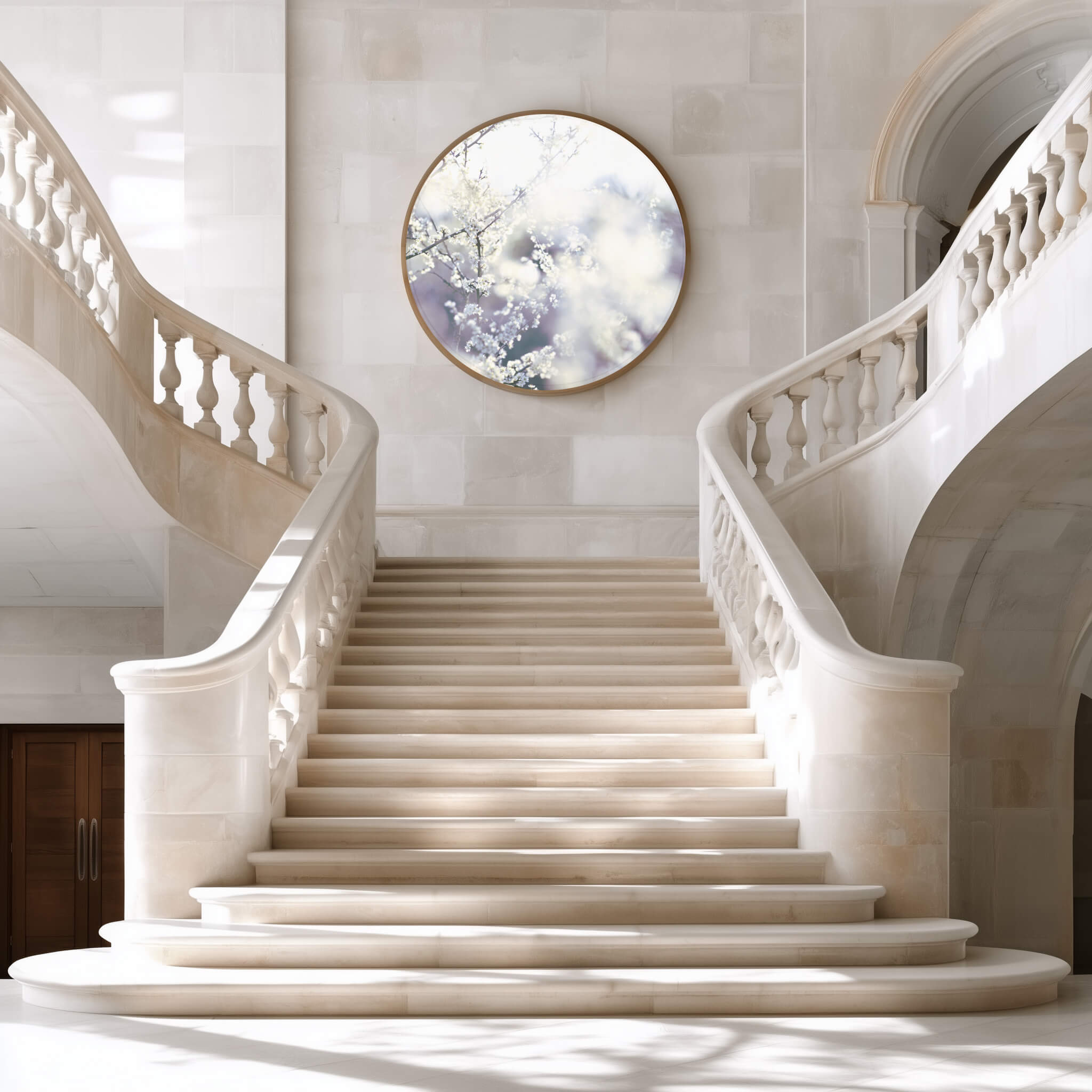
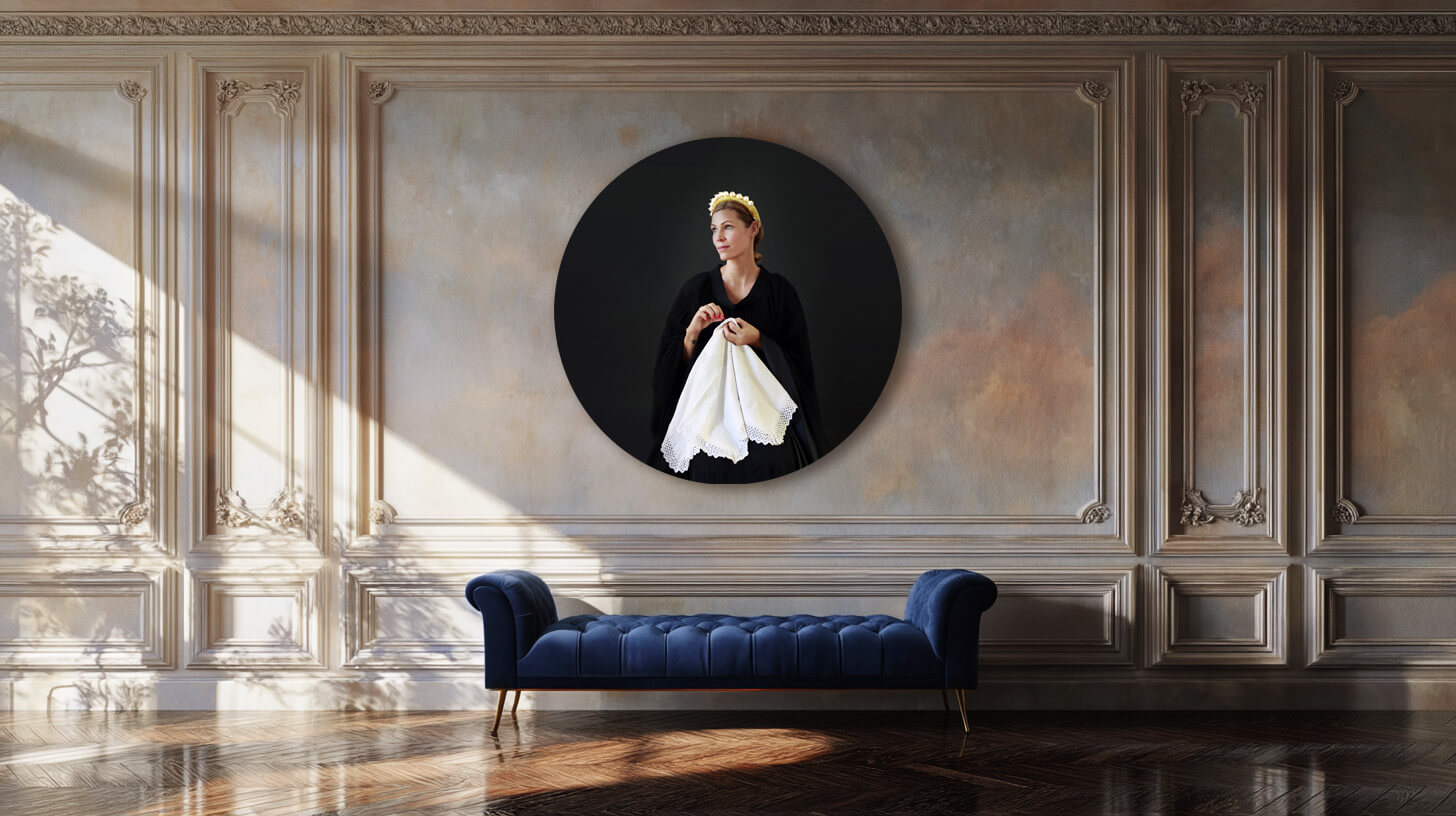
In my own work, I think about limited-edition artworks as part of a larger world. Some belong to Archetype Archives, where portraiture becomes a language of inner figures. Some belong to Forest Frequencies, where atmosphere, nature, and quiet perception come forward.

Both worlds are created for spaces where you feel most yourself.

Not because every artwork must be comfortable.

But because the right work should feel true to the life it enters.

What makes limited-edition artworks valuable?

The value of limited-edition artworks is shaped by several things.

  • Edition size matters. A smaller edition usually means fewer works exist. But scarcity alone is not enough.
  • The artist’s practice matters. Is the edition part of a serious and coherent body of work? Does it connect to a larger visual language? Does the artist continue to develop this world?
  • Material quality matters. A museum-grade print, a photographic edition, a hand-finished work, and an object-based edition each carry different levels of production, touch, and presence.
  • Documentation matters. A collector should know the title, edition number, size, medium, material, year, and whether the work is signed or accompanied by a certificate of authenticity.
  • Condition matters. Limited-edition artworks should be handled, framed, stored, and displayed with care.
  • And perhaps most importantly, meaning matters.

A limited-edition artwork may be valuable because it is rare. But it becomes personally valuable because it continues to speak to you after the first moment of attraction has passed.

What to look for before buying limited-edition artworks

Before buying limited-edition artworks, ask a few careful questions.

  • Is the edition size clear?
  • Is the work signed or numbered?
  • Is there a certificate of authenticity?
  • What medium and material are used?
  • Is the production archival or museum-grade where relevant?
  • Is the artwork part of a larger series or collection?
  • Is it sold framed or unframed?
  • How should it be displayed and cared for?
  • Does the artist explain the world behind the work?
  • Can I imagine living with this piece for years?

These questions are not meant to make collecting cold or overly technical. They are meant to protect the intimacy of the purchase.

When you bring art into your home, you are not only buying an object. You are choosing a presence.

Editions, originals, and open reproductions

It helps to understand the difference between an original, a limited edition, and an open reproduction.

An original is usually a unique artwork. There is only one. A limited edition exists in a fixed number. There may be 5, 10, 30, 50, or another defined edition size, depending on the artist and the work.

An open reproduction has no fixed limit. It may be beautiful, but it does not carry the same rarity or edition structure. None of these categories are automatically good or bad. They simply mean different things.

A collector should know what they are buying. Clarity is part of trust.

How to choose the right limited-edition artwork for your home

Start with recognition. Which image, form, or atmosphere keeps returning to your mind? Which work changes the feeling of the room? Which piece feels connected to who you are now, or who you are becoming?

An artwork for a hallway may act like a threshold.
An artwork for a bedroom may need quiet.
An artwork for a study may need focus.
An artwork for a living room may need presence.
An artwork near your desk may need to remind you of courage, softness, discipline, or return.

Interior scale matters, but it should not be the only decision. A work that is technically the right size but emotionally empty will never fully belong. A work that carries meaning can become the centre of a room even when it is small.

Care and documentation

Limited-edition artworks should be cared for properly.

Avoid harsh direct sunlight unless the work is specifically produced and framed for that condition. Use archival framing materials where possible, especially acid-free mounts and UV-protective glass or acrylic for works on paper or photographic editions.

Keep the certificate of authenticity and invoice safely. These are part of the artwork’s life.

If the work arrives unframed, frame it with someone who understands fine art materials. Good framing does not simply make a work look finished. It protects it.

This is especially important if you want the work to remain part of your collection for many years, or eventually become part of a family archive.

Limited editions and the beginning of a collection

If you are new to collecting, limited-edition artworks can be a beautiful beginning. You do not need to know everything about the art market before you start. You need to look slowly, ask good questions, and choose work that feels both personal and serious.

A personal collection does not need to begin with many works. It can begin with one.

One work that feels like a mirror.
One image that brings the room into focus.
One object that holds a threshold.
One edition that makes you feel more present in your own life.

This is how collecting often begins. Not with a perfect strategy. With recognition.

My approach to limited-edition artworks

At Atlanta Weiss Studio, limited-edition artworks are not treated as afterthoughts.

They are part of the work’s life.

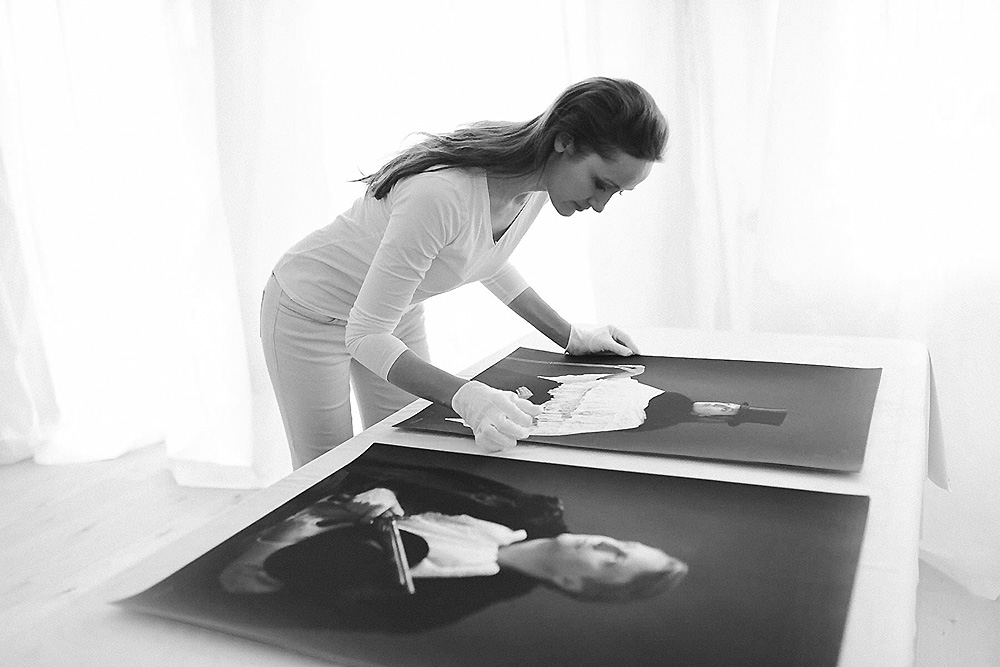
I create editions from worlds such as Archetype Archives and Forest Frequencies, with attention to material quality, emotional atmosphere, and the way an artwork lives inside a private space.

For me, limited-edition artworks should feel clear, considered, and intimate.

The collector should know what they are receiving.
The edition should be respected.
The image should carry a world.
The work should not only enter a room. It should change the way the room listens.

Continue inside the Atlanta Weiss world

If you are beginning or deepening your collection, you are warmly invited to receive Studio Notes — letters on portraiture, collecting, interiors, beauty, and artworks made for spaces where you feel most yourself.

You can also read Start Collecting Art That Feels Like You, explore available limited-edition artworks from Archetype Archives and Forest Frequencies, or join Portrait Letter Club for a monthly studio letter and collectible work.

Hi, I'm Atlanta Weiss, a visual artist based in Cologne, Germany. So glad you're here.

The LATEST

Atlanta's notes on the quiet (or bold) return to oneself, on beauty, interiors, portraiture, and collecting.

Atlanta's studio and beyond — from archetypes that form us, frequencies & atmospheres, Portrait Letter Club and the emotional presence of art in spaces that define us.

Archetype Archives artwork by Atlanta Weiss displayed in a quiet interior

Latest from the Journal

Archetype Archives is a portrait series by Atlanta Weiss about inner figures, human psychology, Jugendstil, allegory, transformation, and the faces we live with before we have words for them.

READ THE POST
Contemporary portrait art by Atlanta Weiss exploring the human image, identity, and being seen

Latest from the Journal

Contemporary portrait art still matters because the human image has become both everywhere and strangely endangered. A studio note on identity, privacy, AI, legacy, and the need to be truly seen.

READ THE POST
Art for spaces where you feel most yourself by Atlanta Weiss displayed in a quiet personal interior

Latest from the Journal

Why I make art for spaces where you feel most yourself. A personal studio note on artist family, atmosphere, inner places of power, Archetype Archives, Forest Frequencies, and art as emotional architecture.

READ THE POST
Portrait Letter Club by Atlanta Weiss with a monthly artwork and studio letter

Latest from the Journal

Portrait Letter Club is a monthly studio letter and collectible artwork by Atlanta Weiss for those returning to themselves through portraiture, archetypes, beauty, and quiet collecting.

READ THE POST
Contemporary portrait artwork from the series Archetype Archives by Atlanta Weiss displayed in a warm minimal home interior

Latest from the Journal

A field note from my studio—not advice. When I stopped painting “gloss” and let my core values (truth, care, courage) steer the portraits, polite work became work that met collectors like a mirror. History, beauty, excellence—and the small ritual that changed the room when the values finally entered.

READ THE POST
Kölner KulturPaten award ceremony in Cologne with artists, cultural partners, and city representatives

Latest from the Journal

Atlanta Weiss receiving the Kölner KulturPaten award in Cologne. This image supports an article on Cologne art history, Art Cologne, artist education, independent artists, cultural shifts, collectors, and the future of contemporary art.

READ THE POST

Meet the Artist

I’M ATLANTA.

I’m a second-generation artist based in Cologne, creating contemporary portrait works, fine art prints, and studio letters for those returning to themselves.

My practice moves between classical skill, symbolism, psychology, interiors, and the quiet power of being seen.

READ about Atlantaavailable artworks

START HERE

What Is Portrait Letter Club?

How to Start Collecting Art Without Feeling Intimidated

Limited Editions & Fine Art Prints: What Collectors Should Know

Collector Resources

Art Books for Those Learning to See

Limited Edition Artworks

What Is Portrait Letter Club?

How to Start Collecting Art That Feels Like You.

Studio News

Notes on portraiture, collecting, beauty, interiors, and artworks made for spaces where you feel most yourself.

Get the NEWSLETTeR

Receive