

A portrait commission is not only about likeness. It begins with a face, a body, a presence, or a person’s public image, but the strongest portraits do something more difficult. They hold attention. They protect dignity. They ask what should remain after the first impression has passed.
A commissioned portrait can become a private witness, a family object, a collector’s work, or a piece that travels further into time than the person who commissioned it first imagined. This is why I do not think of portrait commissions as luxury decoration. I think of them as serious forms of remembrance.
A portrait says: this person mattered. This presence was worth looking at carefully. This life, this season, this becoming, this dignity, this private truth deserved more than a passing image.
In a world where almost everyone is photographed constantly, the portrait has not become less important. It has become more necessary.
What a portrait commission really means
A portrait commission is a portrait created for a specific person, family, couple, collector, founder, private space, or future archive. It is not a generic image. It is not a quick likeness. It is not a decorative face chosen because it fills a wall.
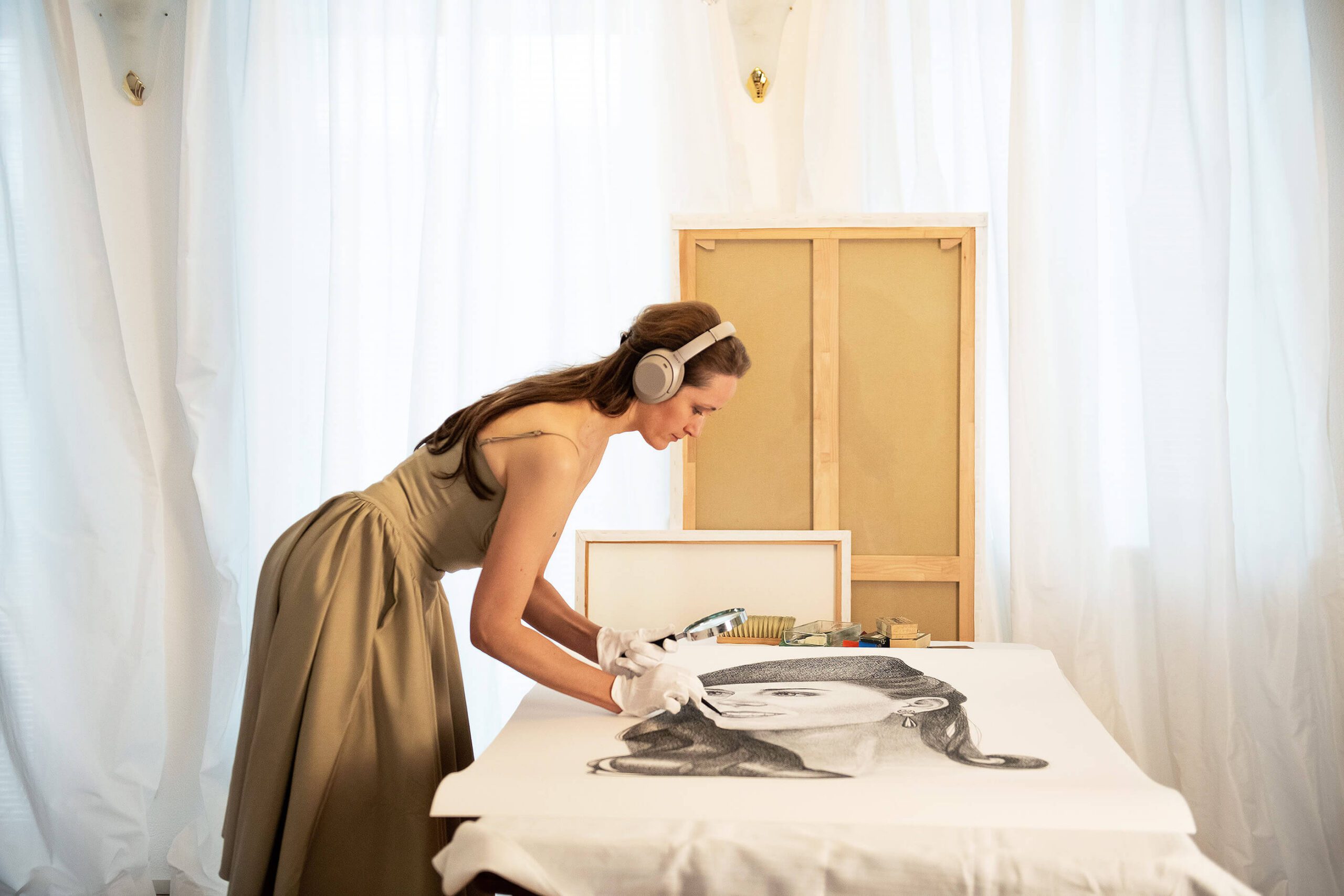
Bespoke portraiture is made through attention. It begins with conversation, trust, observation, privacy, material choices, and the question of what should remain after the work is finished.
Tate defines a portrait as a representation of a particular person. I agree, but I also believe that serious portraiture begins where representation is no longer enough.
A portrait must ask what kind of presence is being protected.
Portraiture has always carried power
Portraiture has always belonged to more than appearance. Kings, queens, patrons, thinkers, artists, families, lovers, children, founders, and cultural figures have all used portraits to say something about identity, position, memory, faith, beauty, lineage, power, or private affection.
A portrait can document status, protect memory, tell a family story, mark a threshold, hold grief, honour achievement, or soften time. This is why portraits do not disappear from culture. They change form, but the need remains.
We still want to know what someone looked like. More than that, we want to know how they were seen.
The difference between an image and a portrait
We live with too many images and not enough portraits. An image may capture how someone appeared for a second. A portrait asks what should be remembered.
This difference matters.
A portrait commission is not only about making someone look beautiful, powerful, elegant, interesting, or accomplished. Those qualities may be present, but they are not enough. The portrait must carry something more durable than flattery. It must hold tension, dignity, atmosphere, silence, and enough complexity for the person not to disappear into style.
The National Portrait Gallery’s guide to reading a portrait reminds us that clothing, pose, expression, objects, background, and colour can all become clues. This is why every detail matters. Not because detail is decoration, but because detail is language.
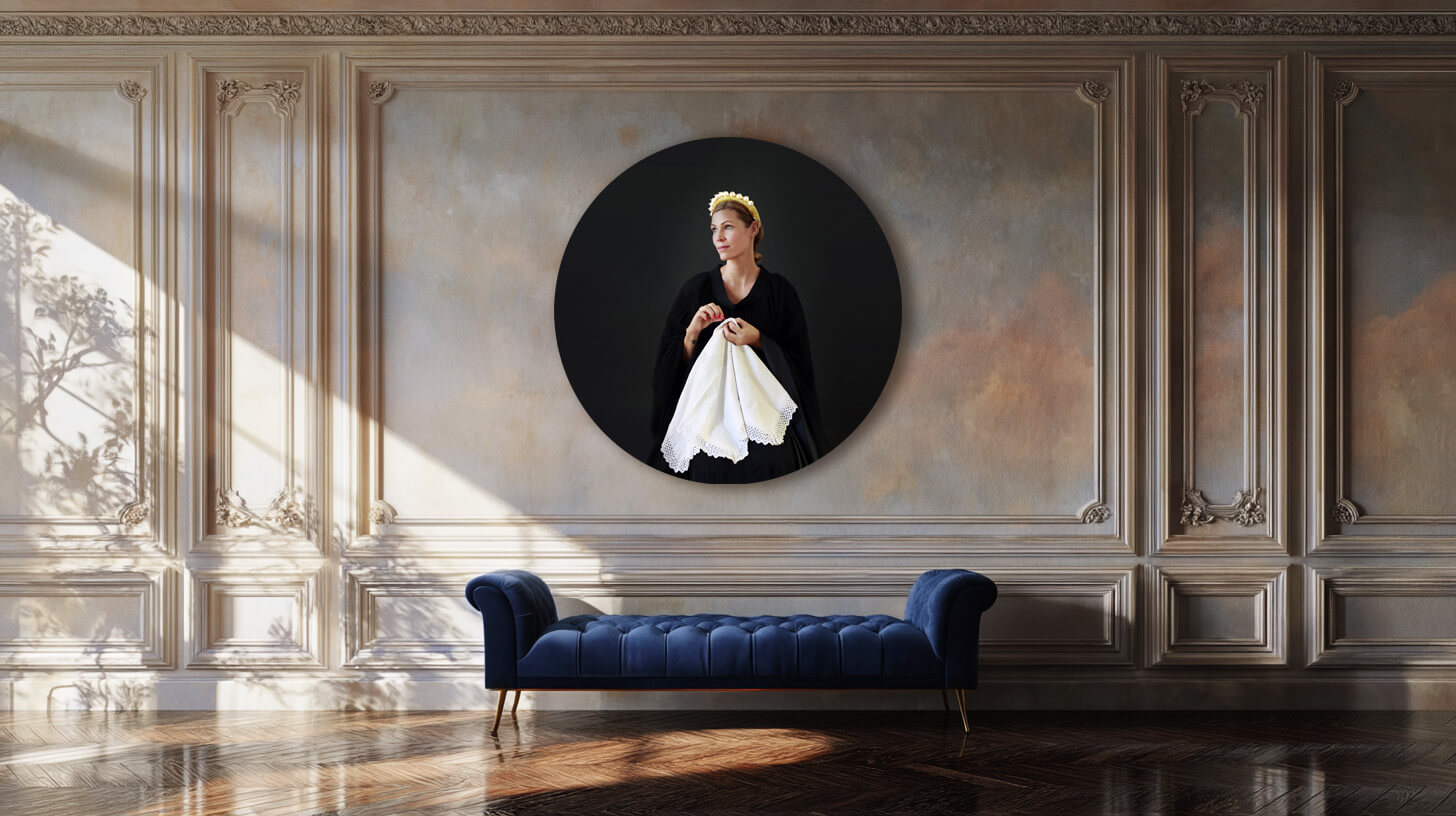
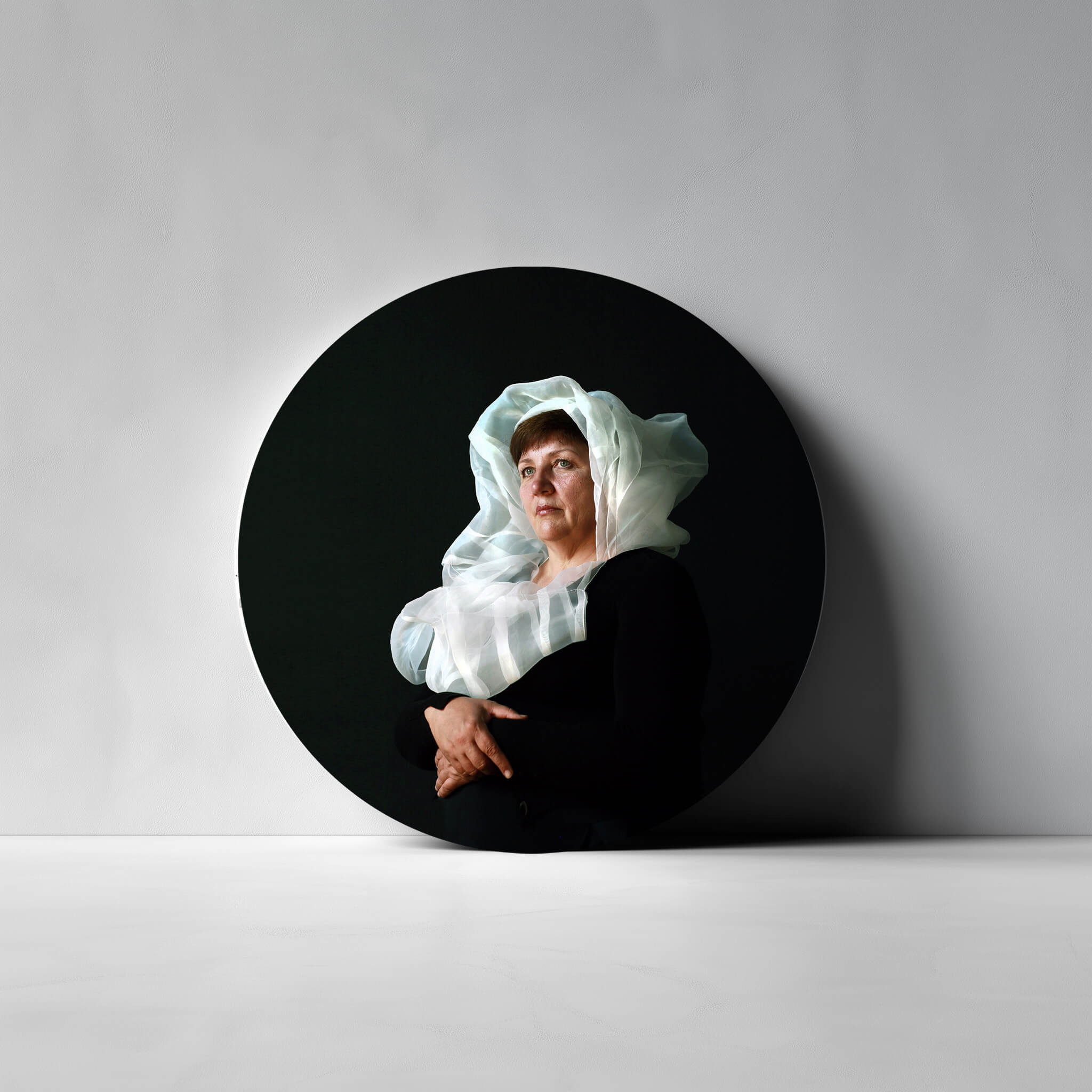
A hand can change the whole portrait. A dark ground can protect the face. A flower can become a private symbol. A circular format can make the person feel held inside a world. A certain distance can create authority. A certain softness can reveal trust.
Nothing in a serious portrait is neutral.
Why legacy matters in a portrait commission
Legacy is often misunderstood. It is not only about wealth, inheritance, or public importance. Legacy can be quieter. It can be the way a child remembers a parent. The way a family holds its line. The way a person marks a season of becoming. The way a collector chooses to preserve a version of themselves that could not be expressed in ordinary language.
A portrait commission can become part of this. It can enter a home now and still speak later. It can remain when the room changes, when the people move, when children grow, when memory becomes less sharp and more symbolic.
A portrait does not stop time. But it can give time something to hold.
This is why I believe portraiture belongs to those thinking in generations. Not because every portrait must become a grand family heirloom. Some portraits are intimate. Some are private. Some are never shown publicly. Some belong to one room, one person, one threshold.
But even the quietest portrait asks a long question: what deserves to remain?
Privacy is part of the portrait
A portrait commission is intimate, and intimacy requires boundaries. Not every commissioned portrait should be shown online. Not every process should become content. Not every collector story belongs in public. A serious portrait practice must know the difference between visibility and exposure.
Privacy is not secrecy. Privacy is respect.
For some collectors, the portrait can be shared, published, exhibited, or documented publicly. For others, the work belongs entirely to the private sphere. Both choices are valid.
In my studio, privacy is discussed from the outset, including whether the finished portrait or images of its development may be shared. The person being portrayed should understand and feel comfortable with those boundaries.
A portrait is not taken from someone. It is built with them.
A portrait commission and the home
A portrait changes the room it enters. It is different from landscape, abstraction, still life, or decorative art because the human presence inside it looks back.
This can be powerful.
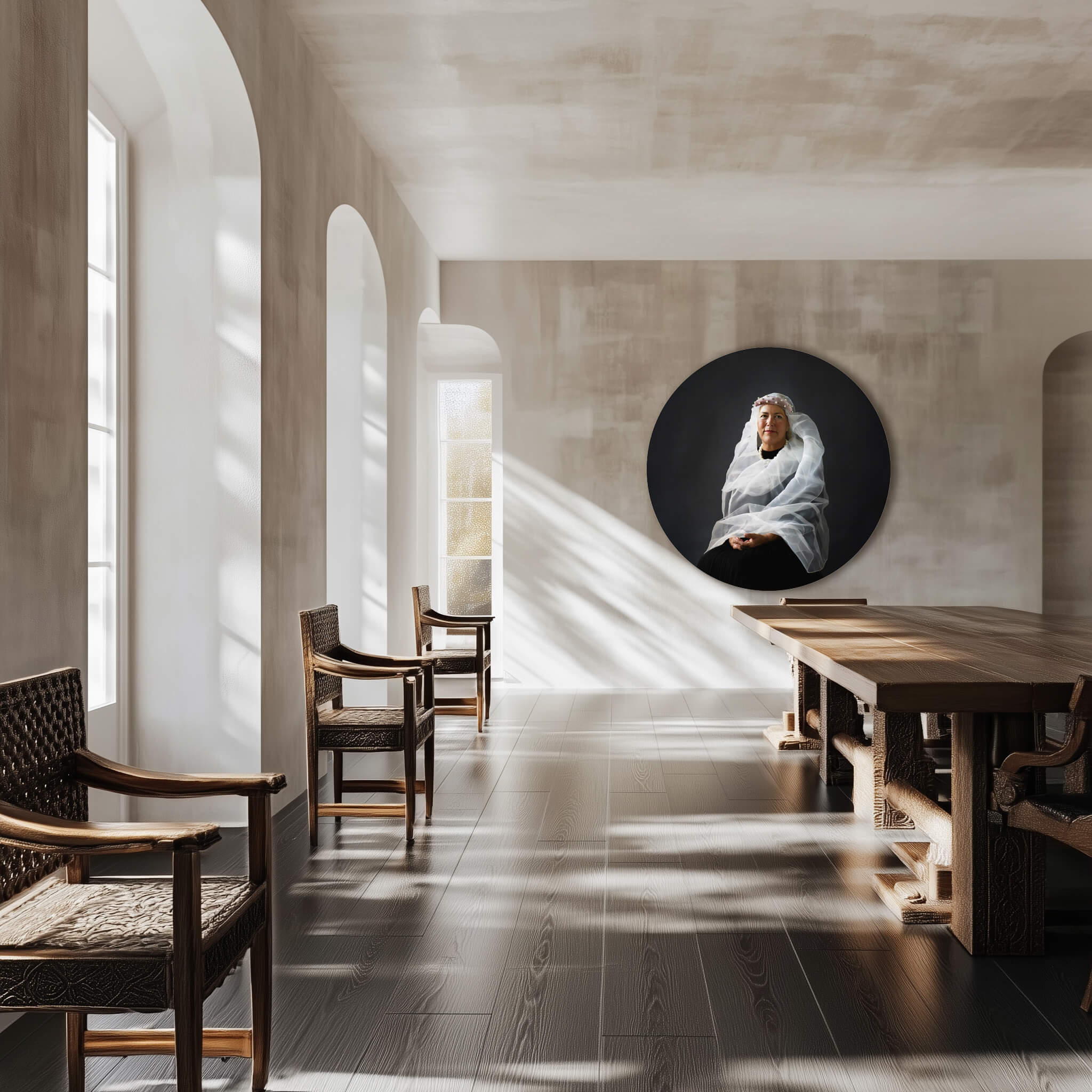
A portrait in a study can create focus. A portrait in a hallway can become a threshold. A portrait in a bedroom can feel private and reflective. A portrait in a family space can become part of the architecture of memory. A portrait in a collector’s interior can give the room a centre of gravity.
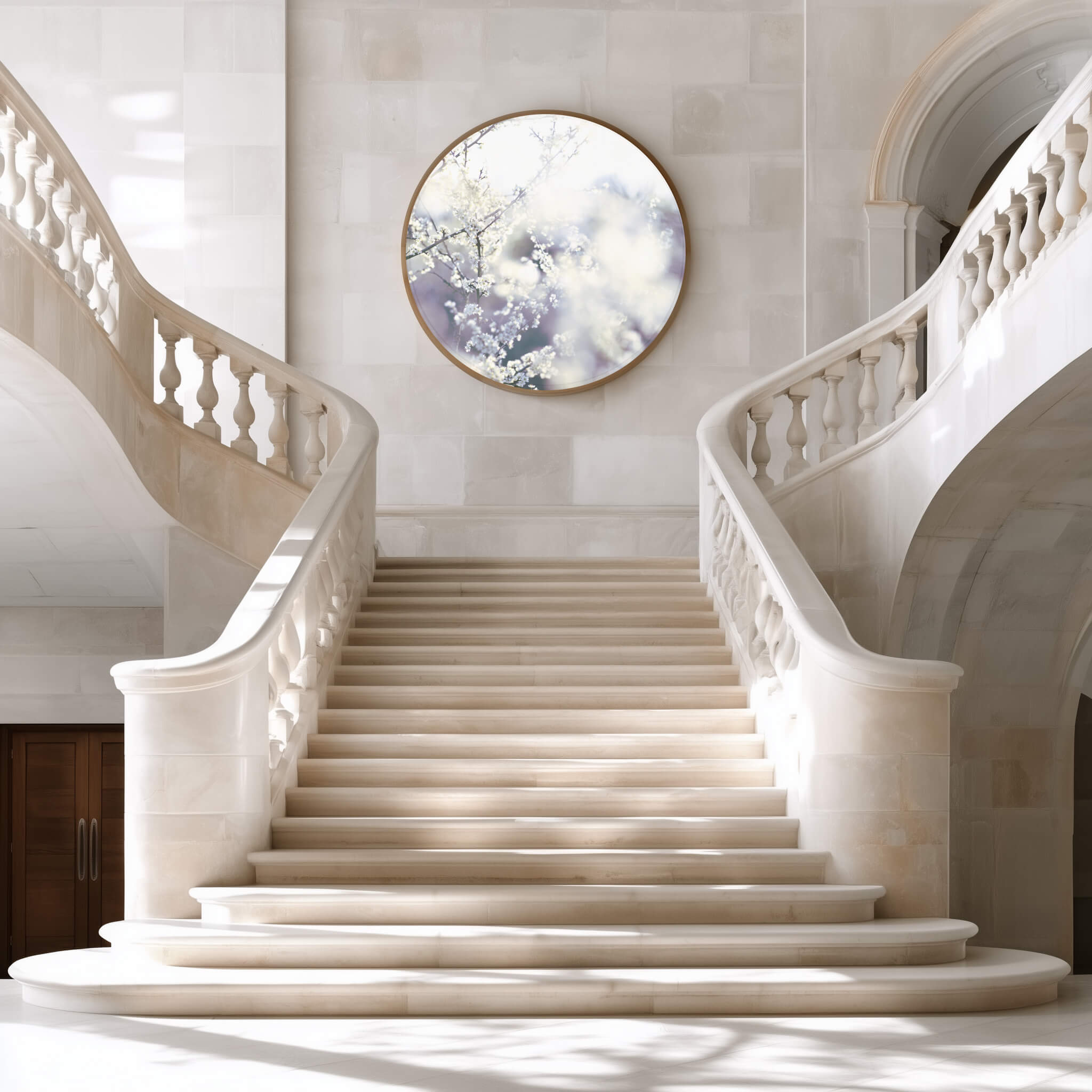
This is why I think carefully about where a portrait will live. The room matters. The light matters. The emotional function of the space matters. A portrait should not only fit an interior. It should deepen it.
The right portrait makes a room feel less anonymous. It gives the space a witness.
‘A portrait is not taken from someone. It is built with them.’
The sitter is not a subject. They are a world.
One of the mistakes in portraiture is to reduce a person to style. A beautiful dress, a strong pose, dramatic lighting, an elegant background, a symbolic object. All of these can help, but none of them are the portrait.
The sitter is not material for an aesthetic. They are a world.
This is why the process matters. Before a portrait becomes an artwork, it needs trust. It needs conversation. It needs enough silence for something more honest to appear.
Some people arrive knowing exactly how they want to be seen. Others arrive with a quieter need. They may not want performance. They may want recognition. They may want to mark a transition, a return, a grief, a victory, a reinvention, a family chapter, or a private becoming.
The portrait must be able to listen to that.
The role of beauty
Beauty in portraiture is not prettiness. Prettiness asks to be liked quickly. Beauty can hold more. It can hold age, authority, tenderness, contradiction, pain, discipline, softness, dignity, desire, and memory.
In my own work, I return to beauty because I do not believe seriousness requires ugliness. Beauty can be rigorous. Beauty can be ethical. Beauty can ask us to rise.
A portrait should not flatter so much that the person disappears. But it should protect their dignity.
That is the kind of beauty I trust.
The process of a portrait commission
Every portrait commission begins before the artwork itself. It begins with the reason.
Why now? Why this person? Why this format? Why this room? Why this season of life? What should the portrait hold? What should it refuse? What should remain private?
From there, the process becomes practical. We speak about scale, medium, materials, atmosphere, clothing, interior placement, privacy, timeline, and whether the portrait will be created through drawing, painting, photography, or a combination of visual studies.
This practical structure matters because it protects the emotional work. A portrait commission should not feel vague. The collector should understand the process, the price, the timeline, the privacy terms, the materials, and the final delivery.
Clarity creates trust. Trust creates better portraits.
Drawing, painting, photography, and contemporary portrait work
A portrait commission does not belong to one medium. A portrait can be painted, drawn, photographed, printed, built through several stages of image-making, developed from a private session into a final artwork, created as a one-of-one original, or held inside a more complex visual archive.
Art UK describes portraiture as engaging with both likeness and identity. This is important because medium alone does not make a portrait serious. The seriousness comes from what the work is able to hold.
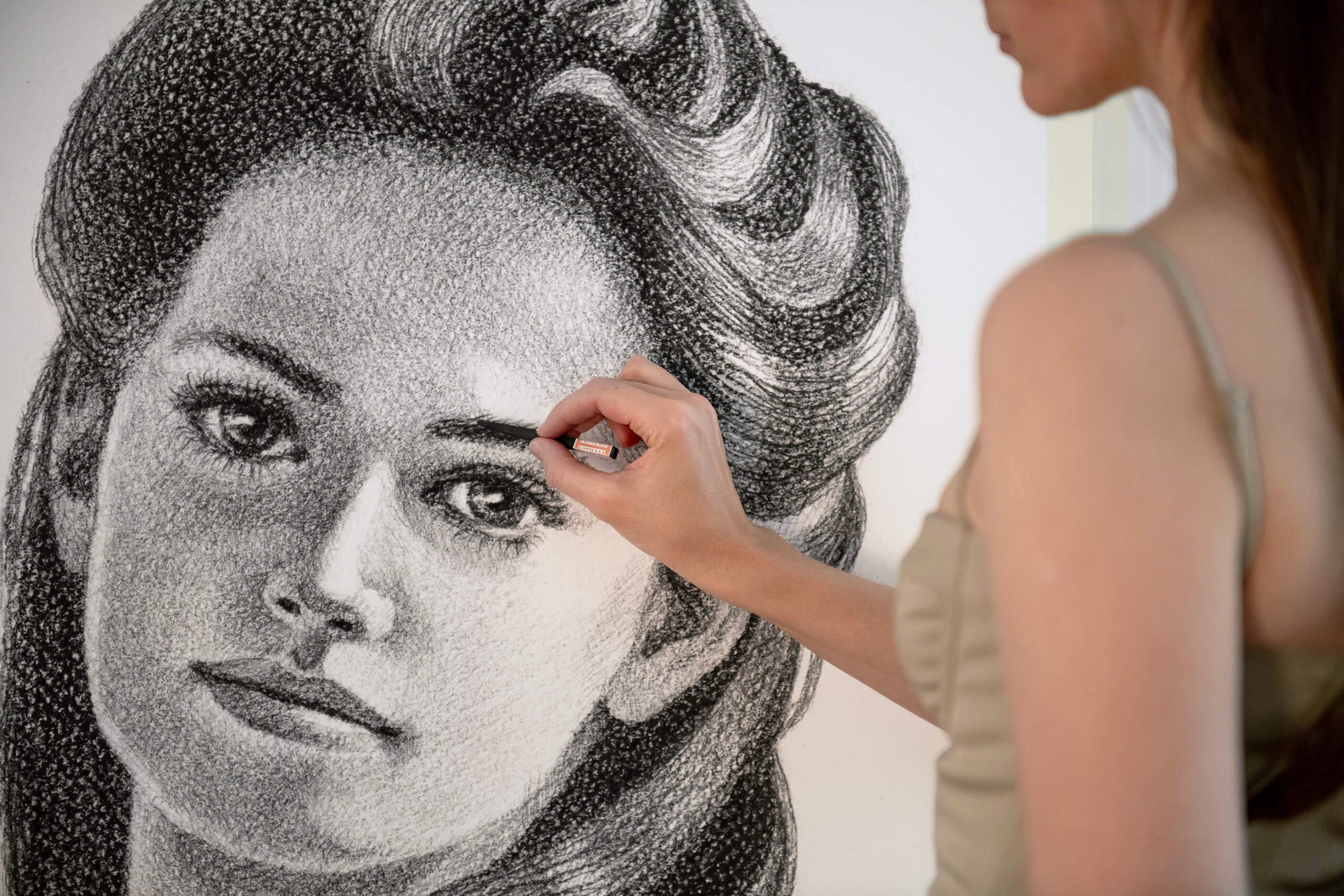
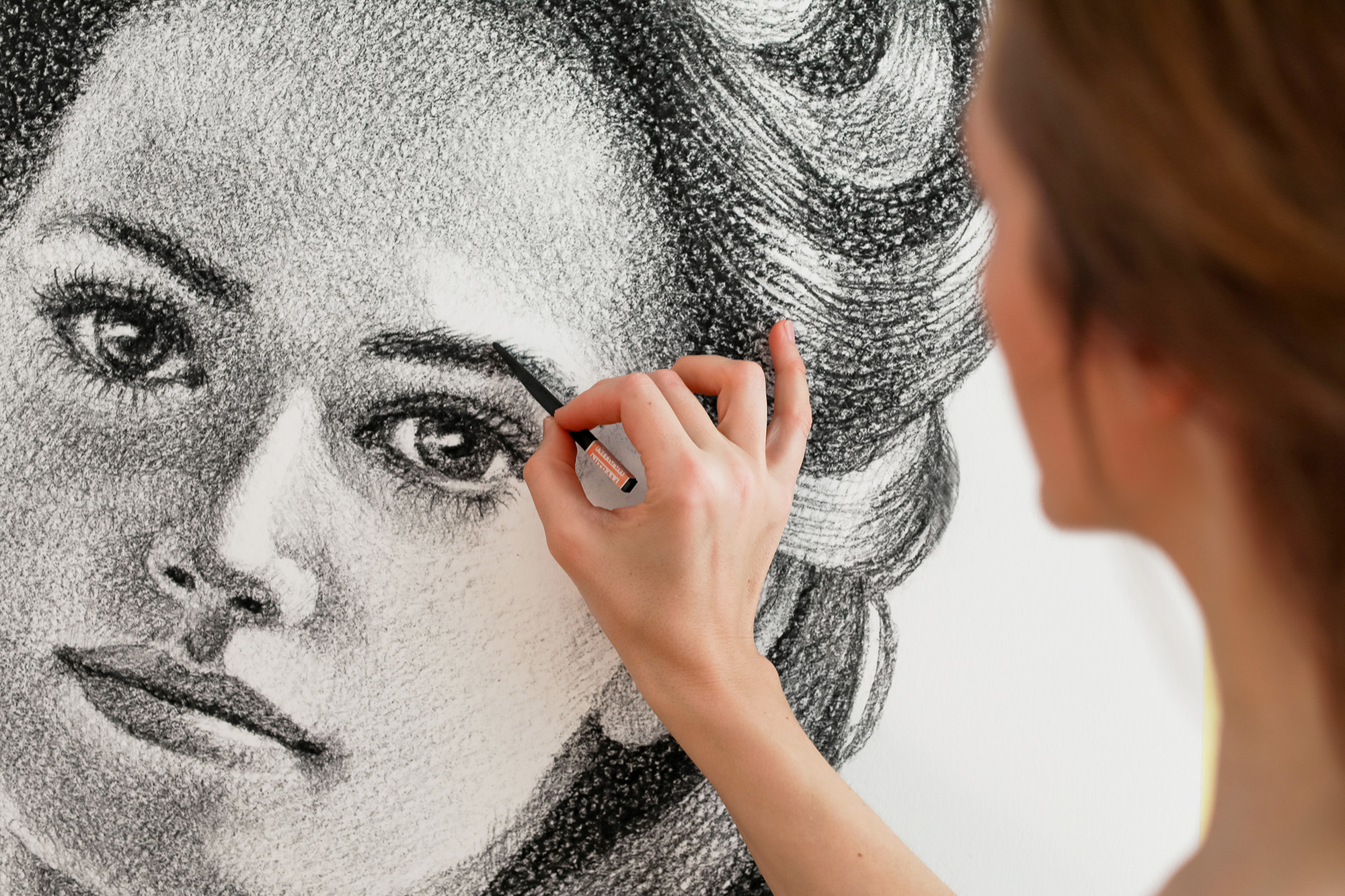
A drawing can feel intimate because the hand is present. A painting can carry time through layers. A photograph can catch something immediate and psychological. A circular portrait work can turn a face into a private world. A large-scale commission can become architectural inside a home.
The question is not which medium is superior. The question is which medium serves the person, the room, and the legacy of the work.
What collectors should ask before commissioning a portrait
Before commissioning a portrait, ask questions that protect the work.
Why do I want this portrait now? Who is it for? Is it public, private, or both? Where will it live? What kind of presence should it carry? Do I want the portrait to feel formal, intimate, symbolic, quiet, powerful, tender, or ceremonial? What medium feels right? What level of privacy do I need? What is the artist’s process? What materials are used? Will there be a certificate of authenticity? How will the work be framed, shipped, installed, or cared for? What happens if the portrait is not allowed to be published?
These questions are not cold. They make the commission more human. They help the artist and collector enter the same room before the work begins.
What makes a portrait timeless?
A timeless portrait is not one that avoids the present. It is one that survives it.
It may include contemporary clothing, a modern room, a specific atmosphere, or a very current psychological truth. But beneath that, it needs structure. It needs composition. It needs restraint. It needs a reason to be looked at again.
Timelessness is not achieved by copying the past. It comes from understanding what the past protected: dignity, symbolism, discipline, beauty, attention, and the belief that a human presence can carry meaning beyond the moment.
This is why I look back to portrait history without wanting to live there. The past teaches weight. The present teaches urgency. The portrait must hold both.
Portrait commission in my studio
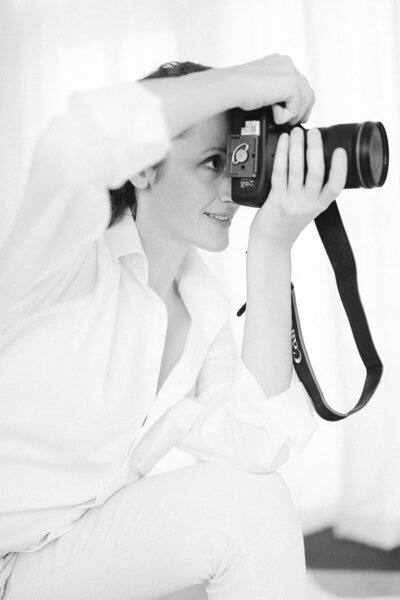
At Atlanta Weiss Studio, a portrait commission belongs to a larger body of work on identity, beauty, image, reputation, and the quiet return to oneself.
I create portraits for people who are thinking beyond the immediate image: collectors, families, founders, thought leaders, private individuals, and those who understand that being seen well is not the same as being exposed.
The process is private, careful, and personal. It can involve conversation, photographic studies, drawing, painting, material decisions, and a final work created for a specific life, interior, and future.
For me, a portrait is not a performance of importance. It is a form of attention.
And attention, when it is serious enough, becomes legacy.
Discuss a portrait commission.
A portrait begins with a reason.
If you are considering a commission, tell me whom it is for, what you wish to mark and where the work might live. You do not need to have settled on a medium or scale; those decisions can develop through conversation.
A portrait does not stop time. But it can give time something to hold. Reflection on commissioning a portrait: the relationship between likeness and interpretation, the importance of privacy and the choices that shape a lasting work.