

A collector’s taste is personal, but the field from which they choose has already been curated.
This is one of the most consequential truths about the art market. Before a collector encounters an artwork at a fair, in a gallery or through an auction catalogue, other people have already made decisions about its visibility. Curators, institutions, galleries, critics, publishers and previous collectors have helped establish which artistic practices deserve attention.
These decisions are not always discriminatory, nor are they necessarily conscious. But their accumulated effects shape the cultural record and the financial opportunities available to artists.
A recent media inquiry about the gender gap in the art market prompted me to reconsider a question that has accompanied me through much of my professional life: What allows an artist to become not only recognised, but capable of sustaining a substantial body of work over decades?
I approach this question as a second-generation artist, a mother, an independent studio practitioner and the founder of an educational initiative for artists. I believe the answer requires us to examine much more than auction prices.
It requires us to look at the conditions in which art is made.
The art market does not merely discover value
The assumption that artistic quality will eventually find its market is comforting. It is also incomplete.
Artistic significance is not created by the market alone, but neither does the market passively recognise it. An artist’s reputation develops through a combination of artistic achievement, critical interpretation, institutional access, collector engagement, provenance and sustained visibility.
A gallery can provide an artist with financial continuity and introductions to serious collectors. A museum acquisition can place work inside an institutional narrative that subsequent generations encounter. An exhibition catalogue can preserve an argument about an artist’s importance long after the exhibition closes.
This is why I consider the gender gap primarily a structural problem that influences demand.
The Burns Halperin Report 2022 found that works by women accounted for only 11% of acquisitions at 31 American museums between 2008 and 2020. Works by Black American women represented just 0.5%.
These are historical findings from a specific sample, not universal statistics about every museum today. Nevertheless, they reveal how exclusion can enter the permanent record.
And what enters the permanent record shapes what future collectors are taught to value.
Women are gaining representation. Are they gaining equivalent economic power?
The evidence in 2026 is more encouraging than it was even a decade ago, but the distinction between visibility and commercial value remains important.
According to the Art Basel and UBS Global Art Market Report 2026, women accounted for 45% of artists represented across dealers in 2025, compared with 35% in 2018. Their share of dealer sales by value increased from 28% to 37% over the same period.
Primary-market galleries reached parity in artist representation, with women accounting for 50% of artists, but their works generated 44% of sales value.
The distinction becomes particularly revealing at the highest commercial levels, where women remain less represented than in smaller galleries.
Meanwhile, a 2026 study in Nature Communications, examining 65,768 contemporary artists across 20,389 institutions, found that male overrepresentation increased with institutional prestige. The researchers also identified a strong association between the gender composition of artists’ exhibition networks and their subsequent access to the auction market.
This suggests that looking only at buyers’ preferences misses an important part of the picture. Artists do not all arrive at the marketplace through equally powerful networks.
The pricing question itself deserves nuance. Research by Fabian Bocart, Marina Gertsberg and Rachel Pownall found an average premium for works by women after controlling for artwork characteristics in their auction sample, alongside disadvantages in the contemporary segment and at the highest price levels.
There is no single, universal female discount that adequately describes every part of the market. There are different markets, career stages and mechanisms of exclusion.
The task is to understand where opportunity is being lost and where investment can change the outcome.
This conversation must extend beyond the Western art world
The global art market is not one coherent ecosystem. New York, London, Dubai, Singapore, Beijing and Cape Town have different institutional histories, collector networks, cultural policies and relationships between public and private patronage.
Yet an important question connects them: who receives the resources necessary to establish a lasting artistic presence?
In the United Arab Emirates, the Ministry of Culture presented three Emirati women artists, Karima Al Shomely, Rawdha Al Ketbi and Sara Ahli, in a dedicated exhibition at Art Dubai in May 2026. Supported through cultural grant programmes, their inclusion demonstrates how public cultural policy can help connect artistic production with broader professional visibility.
In Singapore, the National Gallery’s 2026 exhibition Fear No Power: Women Imagining Otherwise brings together five influential Southeast Asian women artists, including Amanda Heng, Dolorosa Sinaga and Imelda Cajipe Endaya. Their practices show why artistic careers cannot always be separated from education, family, community and social change.
In China, the Central Academy of Fine Arts Art Museum presented Shape of Myself, a nomination exhibition of contemporary Chinese women artists, in March 2026. Such projects are important opportunities for examining how women’s artistic contributions enter institutional discourse and art history.
In South Africa, Cape Town provides a compelling context for examining artistic recognition, collection histories and the relationship between local and international audiences. In September 2026, the Norval Foundation opened Unsteady Realms, the first museum solo exhibition devoted to South African painter Kate Gottgens. The institution is also presenting a new exhibition in its series examining the legacy of Irma Stern.
None of these examples proves that a region has achieved gender equality. Nor should one country’s cultural framework be presented as the model for another.
What they demonstrate is that institutional attention is capable of widening the historical conversation.
Our understanding of artistic significance becomes richer when we look beyond a handful of established Western commercial centres.
Publications are part of the architecture of recognition
When discussing art-market influence, we often focus on galleries, museums and auctions. I believe art journalism deserves equal attention.
Business publications such as Forbes increasingly connect artistic careers with questions of leadership, wealth, philanthropy and professional opportunity. In September 2026, a Forbes contributor examined the divide between women’s growing gallery representation and their economic position.
That same month, Forbes Colombia explored how motherhood, artistic training and professional networks affect the long-term careers of women artists.
The subject is increasingly understood as a question of economic structure, not simply individual recognition.
Specialist art publications contribute another form of cultural authority. The Art Newspaper and Artnet examine institutions, collecting patterns and market data. In the Middle East, Dubai-based Canvas and Selections document artistic developments across regional markets.
In Asia, Art & Market examines the artistic, curatorial and business practices of Southeast Asia. LEAP contributes Chinese and English-language criticism of contemporary Chinese art, while ArtAsiaPacific addresses artistic developments across Asia, the Pacific and the Middle East.
In South Africa, ArtThrob and ART AFRICA have developed distinctive voices in documenting contemporary art, cultural institutions and artists from Africa and the wider Global South.
These publications are not interchangeable, and each has its own editorial priorities. Their importance lies in something larger than publicity.
Criticism, research and sustained coverage influence whose work is discussed, contextualised and remembered.
An artist who is never written about may be absent from a future researcher’s sources, even when the work itself is substantial.
The collector as a cultural author
Collectors can play an extraordinary role in changing the circumstances of artists whose work they believe deserves attention.
The Art Basel and UBS Survey of Global Collecting 2026 found that works by women represented 46% of women collectors’ holdings and 43% of men’s. Women also held a somewhat greater share of works by emerging artists.
These findings describe collecting patterns among surveyed high-net-worth individuals. They do not establish that collector education caused those differences, nor do they suggest that women collectors alone should be responsible for addressing inequality.
The opportunity belongs to everyone with collecting power.
One compelling example is Making Their Mark, developed from the collection of Komal Shah and Gaurav Garg. Its presentation at the National Museum of Women in the Arts in Washington in 2026 brought approximately 80 works by nearly 70 artists into a major institutional context.
That is private collecting acting as a form of public cultural engagement.
But I would distinguish an exhibition from a permanent museum acquisition. The former offers visibility and scholarship; the latter can establish a more enduring institutional commitment.
Both matter, but they are different outcomes.
Collectors can support women artists through primary-market purchases, thoughtful commissions, repeat acquisitions, exhibition loans, publications and introductions to curators. They can learn to read an artist’s body of work rather than responding only to an established market name.
Buying an artwork can help an artist continue. Returning to that artist over years can help a whole practice mature.
This is the kind of collecting I consider culturally significant.
Make room for a woman’s work while she is still making it
For me, the conversation becomes especially personal when we speak about mothers.
I grew up in a family of artists. I understand artistic commitment as a long process requiring discipline, concentration, technical development, and the freedom to pursue ideas whose commercial future may not be immediately apparent. For two decades, my mother prioritised raising my brother and me, while my father’s artistic career continued to develop. I witnessed how differently the time and freedom to create could be distributed within the same family.
Today, I am also a single mother. I want to give my daughter a flourishing environment in which she can discover and realise her potential. Music lessons, swimming, and a bilingual education are part of that commitment. At the same time, I have artistic and entrepreneurial ambitions of my own that I am determined to bring into existence, while carrying the responsibility of building financial security for us both.
These are not competing ambitions in any philosophical sense. But in daily life, both require time, energy, financial resources and sustained attention.
A serious artistic project might require weeks of experimentation before there is a finished work. A commission can demand intense periods of concentration. An exhibition or publication involves preparation that may receive little immediate financial reward.
Childcare does not disappear when an artist enters the studio. Nor does the administration of a household, the responsibility for family members, or the need to secure a reliable income.
This is not a plea for sympathy. It is an economic reality that should be considered when we discuss whose artistic careers become sustainable.
In Germany, according to the Federal Statistical Office, approximately 1.62 million single parents lived with minor children in 2025, representing 19.4% of families with children under eighteen. The proportion was slightly lower than in 2015, so a universal narrative of rapidly growing single-parent households would be inaccurate.
But the scale of the responsibility is substantial, and single-parent families face elevated risks of poverty.
When an artist is the primary caregiver and primary earner, career interruptions can have consequences that extend well beyond a single exhibition season.
This is why I believe we must make room for a woman’s work while she is still making it.
Art history often celebrates perseverance retrospectively. We admire what artists achieved despite poverty, isolation or impossible working conditions. But admiration for the survivors is not a sufficient cultural policy for the next generation.
A lifetime of artistic achievement requires support during the years in which that achievement is taking shape.
The responsibility of art academies
There is another part of this discussion that I find especially urgent: the practical education of artists.
Art academies and universities carry an enormous responsibility. Their task is to cultivate artistic judgment, technical excellence, intellectual independence and the courage to produce work that does not merely repeat the visual conventions of its time.
That responsibility is indispensable.
But I believe it is incomplete if graduates leave without understanding the basic economic and legal conditions under which they are expected to work.
A fine arts graduate should understand how to price a work, calculate production costs, negotiate a commission agreement, protect intellectual property, document provenance, manage taxes, read a gallery contract and build financial reserves.
The graduate should also understand the difference between a primary sale and a resale, the role of a gallery, the responsibilities of an artist towards a collector, and the risks of confusing public visibility with income.
For artists who are parents or expect to become parents, long-term career planning should also include childcare, insurance, emergency reserves, interruptions to production and ways of maintaining professional relationships through different life stages.
These are not questions beneath the dignity of artistic education.
They are conditions of artistic independence.
The need for stronger professional preparation extends across creative industries. UNESCO’s 2026 report on skills and employment identifies precarious working conditions, economic vulnerability and curricula that have not kept pace with professional realities.
Practical training already exists in some institutions. The University of the Arts London, for example, offers business training covering legal questions, taxation, costing, pricing and self-employment.
But such knowledge should not depend on an artist independently discovering an additional course after graduation.
I would like to see every serious arts institution offer a coherent foundation in professional practice and financial literacy, adapted to local laws and the conditions of its creative sector.
Not to turn artists into salespeople.
To give them greater freedom to remain artists.
Artistic freedom requires economic literacy
I have long been interested in the relationship between an artist’s inner resources and the external structures that allow a practice to endure.
That interest contributed to my founding Art Wisdom Education, alongside my independent studio practice. I wanted to explore how artistic development, history, financial administration, communication, professional relationships and personal values could belong to one coherent understanding of an artistic career.
The goal is not to subordinate art to business. It is to recognise that a strong practice needs both an artistic foundation and the means to sustain itself.
An artist who understands contractual rights can make more informed decisions about representation. An artist who understands costs can price without relying entirely on intuition. An artist who understands the collector’s perspective can build relationships without surrendering artistic authority.
Financial literacy cannot eliminate unequal access to institutions, collector wealth or unpaid care. But it can reduce avoidable vulnerability.
And that matters particularly for people whose circumstances give them little margin for expensive mistakes.
We need better measures of cultural progress
If we want to know whether the art market is becoming more equitable, counting exhibitions is only a beginning.
I would ask institutions, galleries, collectors and public funders to examine the relationship between visibility and sustained professional outcomes.
How many artists receive paid opportunities rather than publicity alone? How many obtain repeat institutional support? What happens to artists who take parental leave or reduce production temporarily? How many are still producing substantial work ten or twenty years after graduation?
And when collectors say they want to support women artists, how much of that support reaches living artists through primary-market acquisitions and commissions?
A spectacular auction result can create a powerful narrative. But the proceeds of a resale generally go to the seller, not to the artist whose career is being celebrated.
The economic infrastructure of artistic production deserves at least as much attention as the exceptional price achieved at its most visible endpoint.
For collectors, this means looking beyond a famous signature. For museums, it means considering acquisition and research commitments. For galleries, it means building long-term careers rather than short cycles of visibility.
For educators, it means preparing young artists for the world they will actually enter.
Who will be remembered?
A cultural legacy is not simply the sum of individual talent.
It is also the outcome of opportunities, decisions and investments made by people who may never appear in the final museum label.
The collector who purchased an early work. The gallery that remained committed through difficult years. The curator who recognised an artist before there was market consensus. The educator who taught a graduate how to protect a practice financially.
I want more women artists to have the opportunity to develop work over an entire lifetime. I want that possibility to extend to mothers, single parents and artists whose domestic responsibilities are substantial. And I want young artists to understand that financial literacy does not diminish their creative identity.
It helps protect it.
Collectors should choose artworks through informed artistic judgment, not through gender alone. But informed judgment also requires an awareness of how our choices have been shaped by previous institutional decisions.
Collecting is an exercise in cultural authorship. Every acquisition helps decide whose vision will be preserved, studied and passed on.
The question is not only which artists the market will celebrate.
It is which artists we are willing to sustain long enough for their most important work to exist.
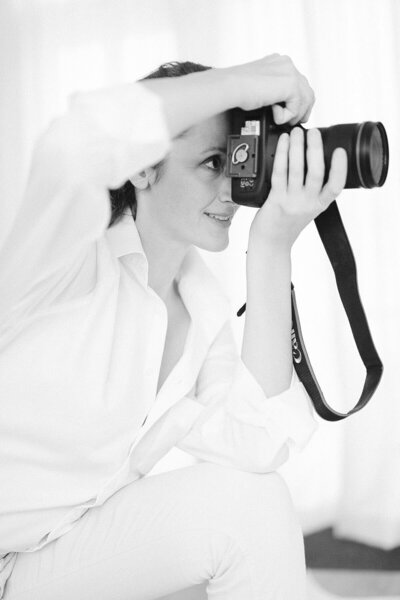
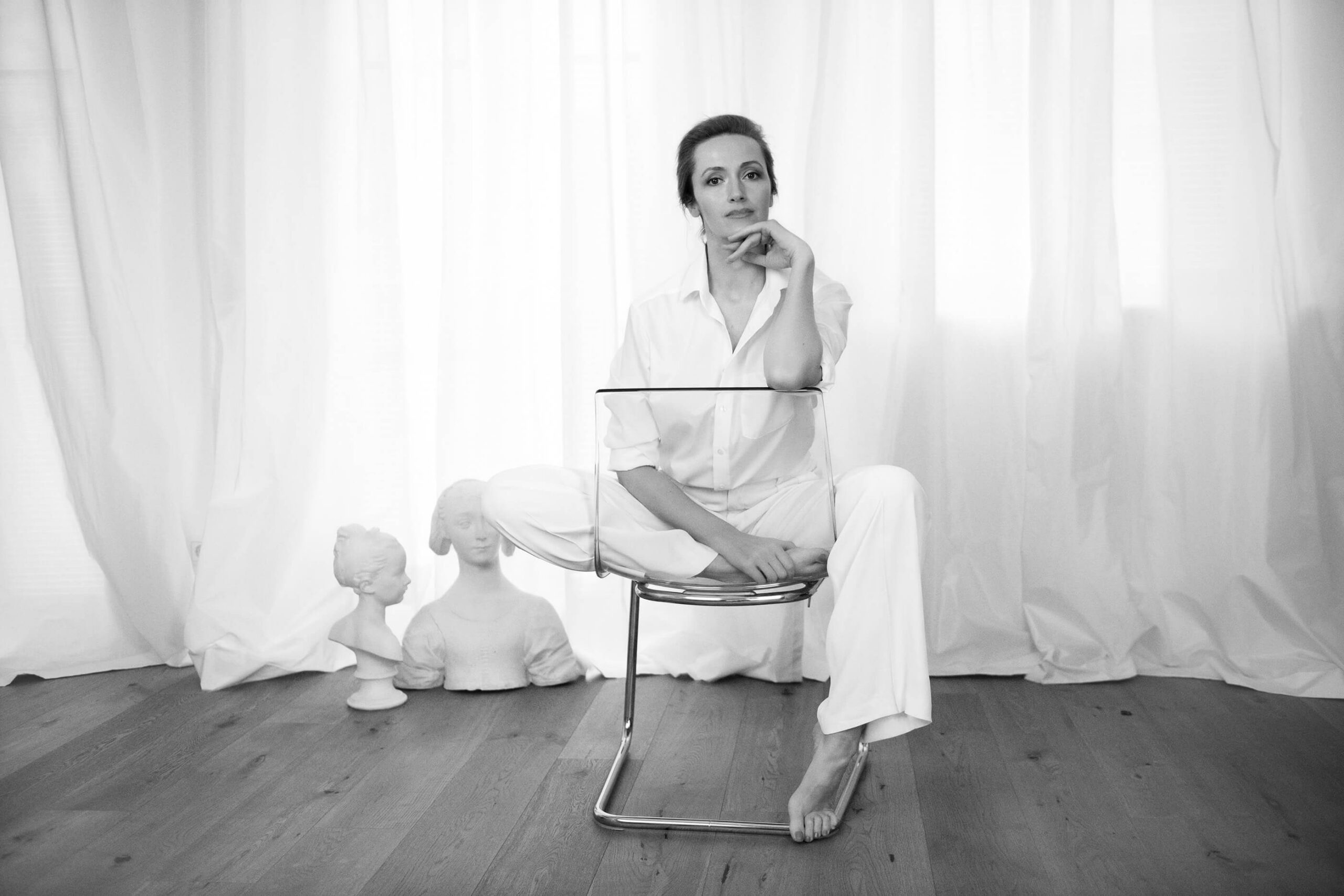
Atlanta Weiss is a second-generation visual artist and fine art portrait photographer based in Cologne, Germany. Through Atlanta Weiss Studio, she creates contemporary artworks and private portrait commissions. She is also the founder of Art Wisdom Education, an educational initiative focused on the knowledge and professional structures that sustain artistic careers.
Explore the Journal or resources for collectors.
Who shapes art history, and who gets left behind? Atlanta Weiss examines gender inequality in the art market, the power of collectors, the challenges facing artist-mothers, and why financial literacy must become part of art education.